
There is an old Chinese saying: “One may go three days without food, but not one day without tea.” Liang Shiqiu once wrote that wherever there are Chinese people, there is tea. Tea belongs to everyone, regardless of status. Some sip rare teas with care, while others drink simple tea by the bowl. Even by the roadside, one may find people offering tea to passersby.
In Chinese culture, tea is more than a drink. It is part of daily life, hospitality, and long-standing wellness traditions. Some people drink tea simply to quench thirst, while others see it as a refined habit. In fact, tea has long been valued as a traditional food-and-wellness ingredient.
Tea contains a variety of natural compounds, including tea polyphenols, amino acids, pigments, polysaccharides, caffeine, vitamins, and minerals. These components may help support antioxidant activity, digestive comfort, mental clarity, and daily metabolic balance. When enjoyed properly, tea can be a gentle and practical part of everyday wellness.
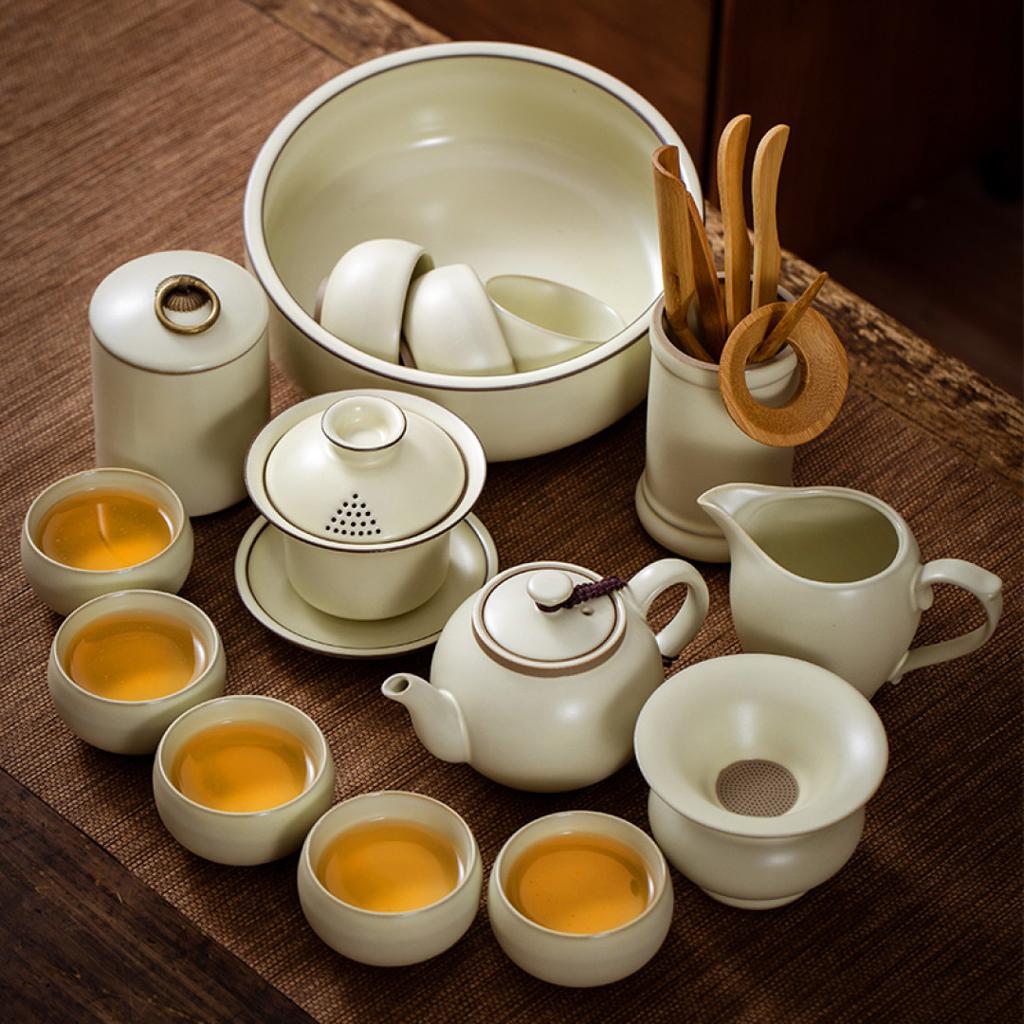
This article introduces the six major types of Chinese tea, their processing methods, key compounds, and suitable daily wellness uses.
1. The Six Major Types of Tea
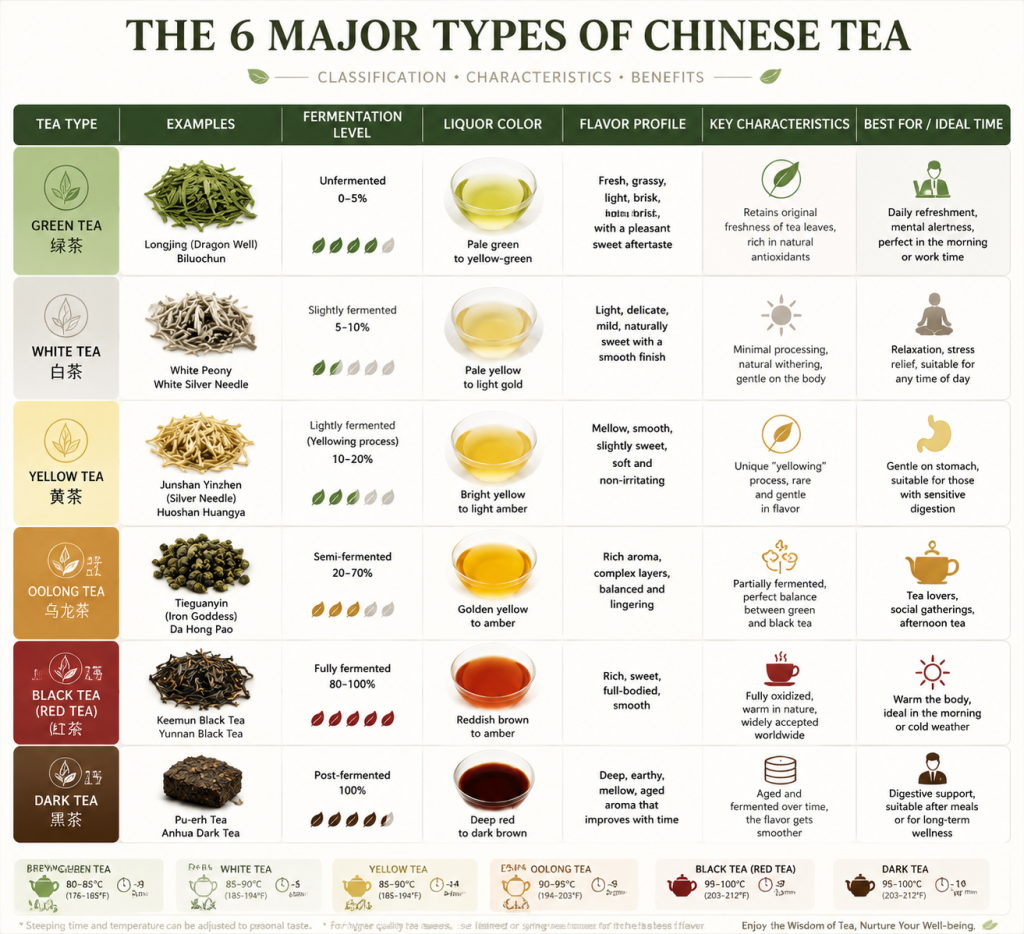
Chinese tea is commonly classified into six major categories according to color, processing method, and degree of fermentation: green tea, black tea, oolong tea, white tea, dark tea, and yellow tea. Each type has its own craftsmanship, flavor profile, cultural meaning, and daily wellness characteristics.
1. Green Tea: Fresh and Rich in Natural Tea Polyphenols
Green tea is an unfermented tea. It is made through fixation, rolling, and drying, with a fermentation level of about 0% to 5%.
Because it retains many natural compounds from fresh tea leaves, green tea is rich in tea polyphenols, caffeine, theanine, vitamins, and other nutrients. It is known for its fresh taste and is often chosen by people who prefer a clean, refreshing tea experience.

2. Black Tea: Warm, Smooth, and Gentle
Black tea is a fully fermented tea, with a fermentation level of about 80% to 100%. It is named for the reddish color of its tea liquor and brewed leaves.
Black tea has a mellow, smooth character and is generally considered gentler than unfermented teas. It contains theaflavins and other natural tea pigments, making it a suitable option for people who prefer a warm and comforting daily drink.

3. Oolong Tea: Balanced and Aromatic
Oolong tea, also known as blue-green tea, is semi-fermented, with a fermentation level of about 15% to 50%.
It combines the freshness of green tea with the floral and rich aroma of black tea. Oolong tea is often appreciated for its layered fragrance, smooth taste, and balanced character. It is commonly enjoyed after meals or during work breaks.

4. White Tea: Light, Gentle, and Refreshing
White tea is lightly fermented, with a fermentation level of about 5% to 10%. It is one of China’s traditional tea categories and is made with minimal processing.
White tea has a light, clean flavor and is traditionally valued for its refreshing nature. It is often enjoyed during warm seasons or when people prefer a mild and soothing tea.

5. Dark Tea: Mellow and Fermented
Dark tea is a post-fermented tea. Its production includes picking, fixation, rolling, and a special fermentation process known as “wet piling,” in which tea leaves undergo microbial transformation under controlled conditions.
After post-fermentation, dark tea develops a unique mellow aroma and deep taste. It is often chosen by people who enjoy rich, smooth teas and those who prefer a comforting drink after meals.

6. Yellow Tea: Mild and Smooth
Yellow tea is a lightly fermented tea, with a fermentation level of about 10% to 20%. Its key processing step is called “yellowing,” which allows the tea leaves to gently transform in color, aroma, and taste.
Yellow tea is known for its yellowish leaves, smooth liquor, and mellow freshness. Compared with green tea, it is often softer in taste and less sharp on the palate.

2. Five Key Natural Compounds in Tea
Tea is not simply flavored water. Each cup contains a combination of natural active compounds. The following five are especially important in understanding tea’s wellness value.
1. Tea Polyphenols: Natural Antioxidant Compounds
Tea polyphenols are among the most important natural compounds in tea. They include catechins, flavonoids, anthocyanins, phenolic acids, and other related substances.
Catechins are the main component of tea polyphenols, accounting for about 65% to 80% of the total. Common catechins include EC, EGC, ECG, and EGCG. In general, green tea contains relatively higher levels of tea polyphenols, while more heavily fermented teas contain lower levels.
2. Theanine: A Naturally Calming Tea Amino Acid
Theanine is a characteristic amino acid found in tea and contributes to tea’s smooth, fresh taste. Among the many amino acids in tea, theanine accounts for about 50% to 60%.
Theanine is valued for helping create a relaxed yet clear-headed feeling, making tea a popular choice for people who want a calm and focused daily beverage.
3. Tea Pigments: Natural Compounds in Fermented Tea
Tea pigments include theaflavins, thearubigins, and theabrownins. These compounds are mainly found in fermented teas such as black tea and dark tea.
They contribute to tea color, flavor, and overall character. Fermented teas are often chosen by people who prefer a richer, warmer, and smoother tea experience.
4. Caffeine: Gentle Daily Refreshment
Tea naturally contains caffeine. The caffeine level varies depending on tea type, processing, brewing method, and leaf quality.
Compared with coffee, tea often feels gentler because caffeine works together with theanine and other compounds. This gives tea its familiar effect of helping people feel refreshed while remaining relatively calm.
5. Tea Polysaccharides: Natural Support for Daily Balance
Tea polysaccharides are natural compounds found in tea leaves. They are often combined with proteins and include components such as arabinose, xylose, fucose, glucose, and galactose.
These compounds are valued in traditional wellness culture for supporting daily metabolic balance and overall vitality.
3. Tea in Traditional Food-and-Wellness Culture
Many people think tea is just a beverage, but in Chinese tradition, tea has long been regarded as both a daily drink and a wellness ingredient.
Tea is gentle, versatile, and suitable for many daily routines. When brewed simply, it is a refreshing drink. When paired thoughtfully with different lifestyles and body constitutions, it can become part of a balanced wellness habit.
In traditional Chinese wellness theory, tea is associated with supporting clarity, digestion, relaxation, and internal balance. Ancient texts also praised tea for its refreshing and uplifting qualities.
Different types of tea have different characteristics:
Green tea and white tea are less fermented and tend to be fresh and cooling in nature. They are often suitable for people who prefer a light and refreshing drink.
Black tea and dark tea are more fermented and tend to be warmer and smoother. They are often suitable for people who enjoy mellow teas or want a comforting drink after meals.
Oolong tea and yellow tea are moderately processed and relatively balanced. They are suitable for many daily tea drinkers and are often enjoyed for their fragrance and smoothness.
4. Modern Understanding of Tea’s Wellness Value
The wellness value of tea is not only part of tradition. Modern research has also explored tea’s natural compounds and their relationship with antioxidant activity, oral care, cardiovascular wellness, emotional balance, and daily metabolism.
1. Supporting Cellular Health
Tea contains EGCG and other catechins, which are widely studied natural plant compounds. These compounds are associated with antioxidant activity and may help the body maintain normal cellular balance as part of a healthy lifestyle.
2. Supporting Cardiovascular Wellness
Tea polyphenols, theaflavins, and other compounds have been studied for their role in supporting lipid metabolism and cardiovascular wellness.
Dark tea, oolong tea, and other fermented or semi-fermented teas are often chosen by people who want a rich-tasting tea after meals and a balanced daily routine.
3. Supporting Calm and Focus
Tea contains amino acids, especially theanine, which may help promote a calm and focused state. This is one reason many people enjoy tea during work, study, reading, or quiet moments.
Tea offers a unique balance: it can refresh the mind while still feeling gentle and soothing.
4. Supporting Oral Freshness
Tea polyphenols have been studied for their role in oral care. Drinking tea without added sugar may help support fresh breath and daily oral hygiene habits.
5. Tea Is Good, But It Should Be Enjoyed Properly
Although tea is a healthy daily beverage for many people, it is not suitable for every situation.
People with sensitive digestion may prefer warmer and milder teas, such as black tea or dark tea, instead of strong green tea.
Avoid drinking strong tea on an empty stomach, as it may cause discomfort for some people.
Avoid drinking cold tea frequently, especially if you are prone to digestive discomfort.
People who are sensitive to caffeine, pregnant, nursing, or experiencing sleep problems should choose tea carefully and avoid drinking strong tea late in the day.
Tea is best enjoyed in moderation. Choosing the right tea according to your body condition, lifestyle, and season can make tea a more comfortable and sustainable part of daily welln
Conclusion
Tea is one of the most important daily drinks in Chinese culture. It is simple, affordable, and deeply connected with traditional wellness wisdom.
Green tea is fresh, black tea is warm, oolong tea is balanced, white tea is light, dark tea is mellow, and yellow tea is gentle. Each type has its own character and suitable drinking scene.
A good cup of tea is not about mystery or formality. It is about choosing wisely, drinking comfortably, and allowing a simple daily habit to bring calm, refreshment, and balance to life.