
Beginner-Friendly Gua Sha Guide
Gua Sha for Modern Self-Care
A clear visual guide to the traditional Chinese gua sha ritual: what it is, how to prepare, how to move the tool, and how to keep the practice gentle, clean, and easy to understand.
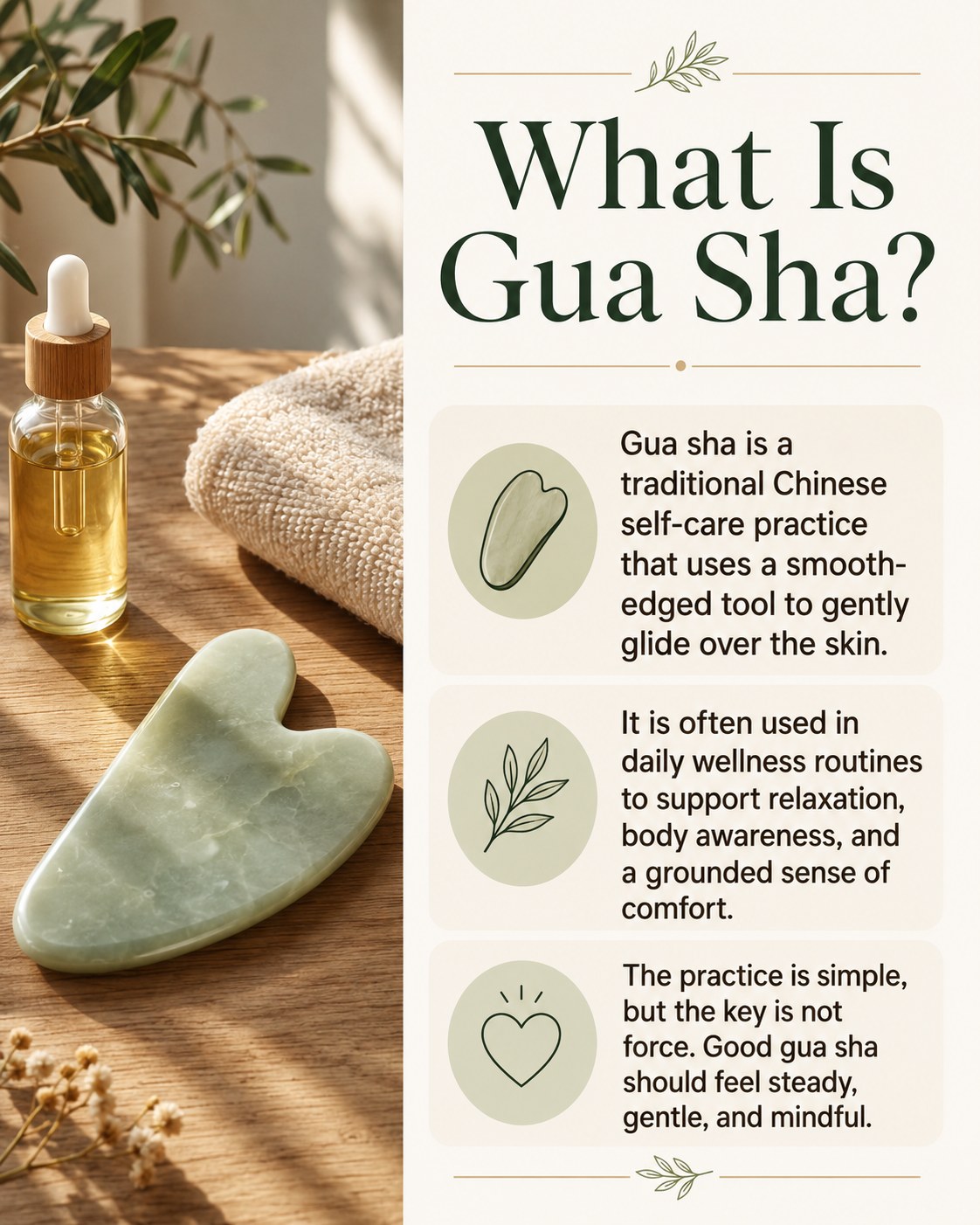
What Is Gua Sha?
Gua sha is a traditional Chinese self-care practice that uses a smooth-edged tool with oil or balm to glide over the skin. In daily wellness culture, it is used as a mindful body-care ritual for relaxation, warmth, and body awareness.
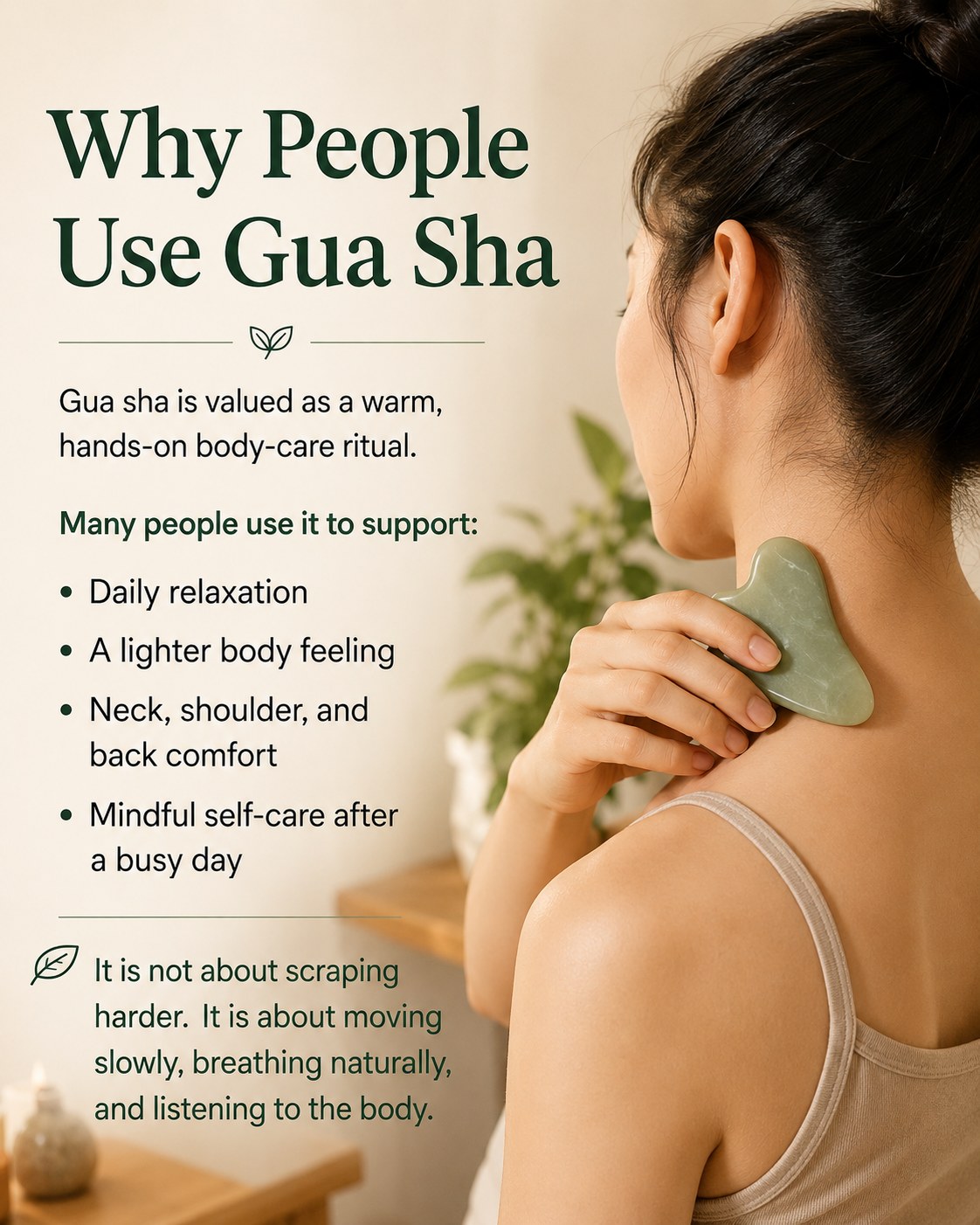
Why People Use Gua Sha
People often include gua sha in self-care routines for neck, shoulder, back, and whole-body comfort. The focus is not strong force; it is slow movement, steady breathing, and listening to the body.
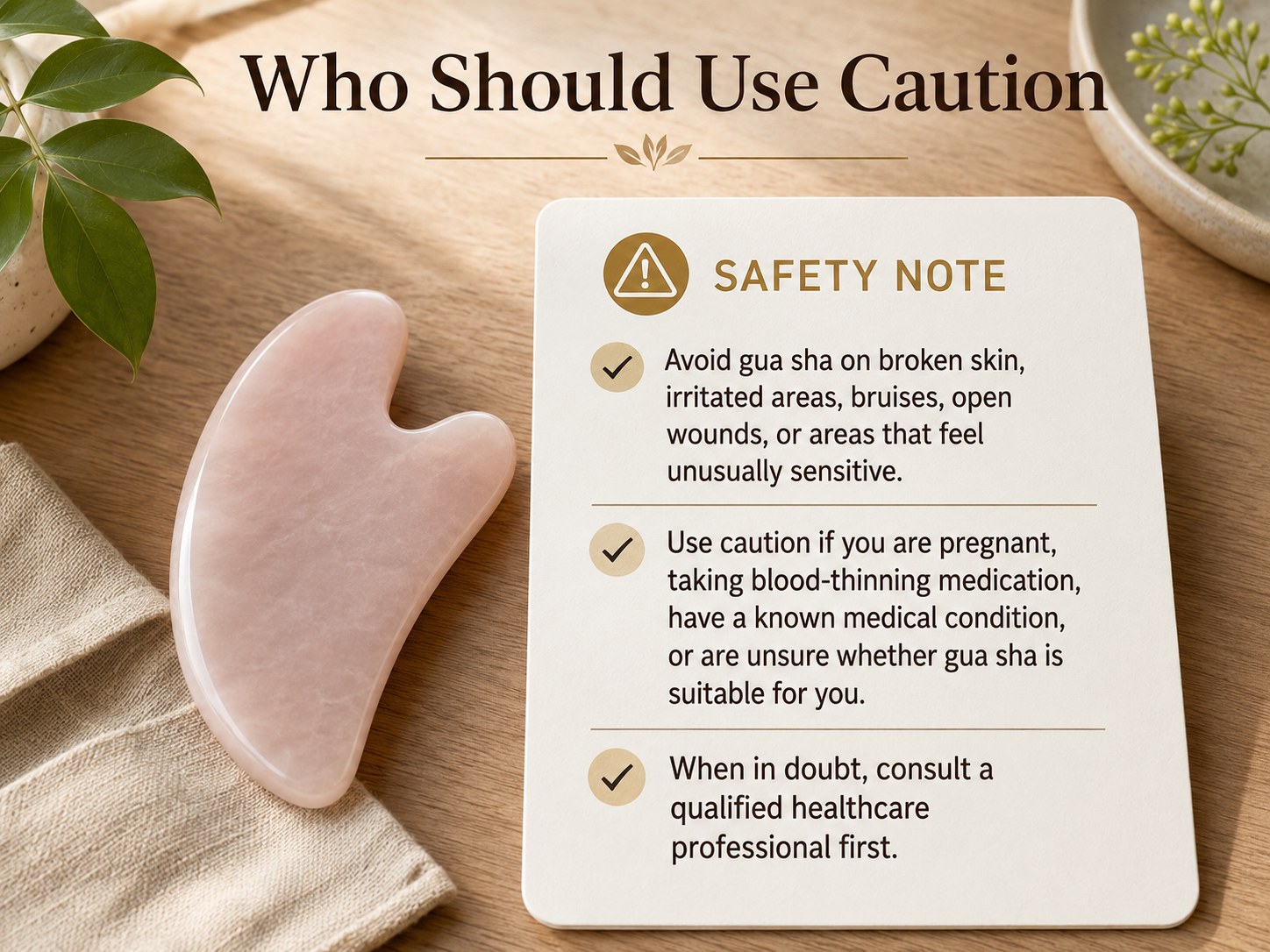
Who Should Use Caution
Do not use gua sha on broken skin, irritated areas, open wounds, or areas that feel unusually sensitive. Use caution if you are pregnant, taking blood-thinning medication, have a known medical condition, or are unsure whether gua sha is suitable for you.
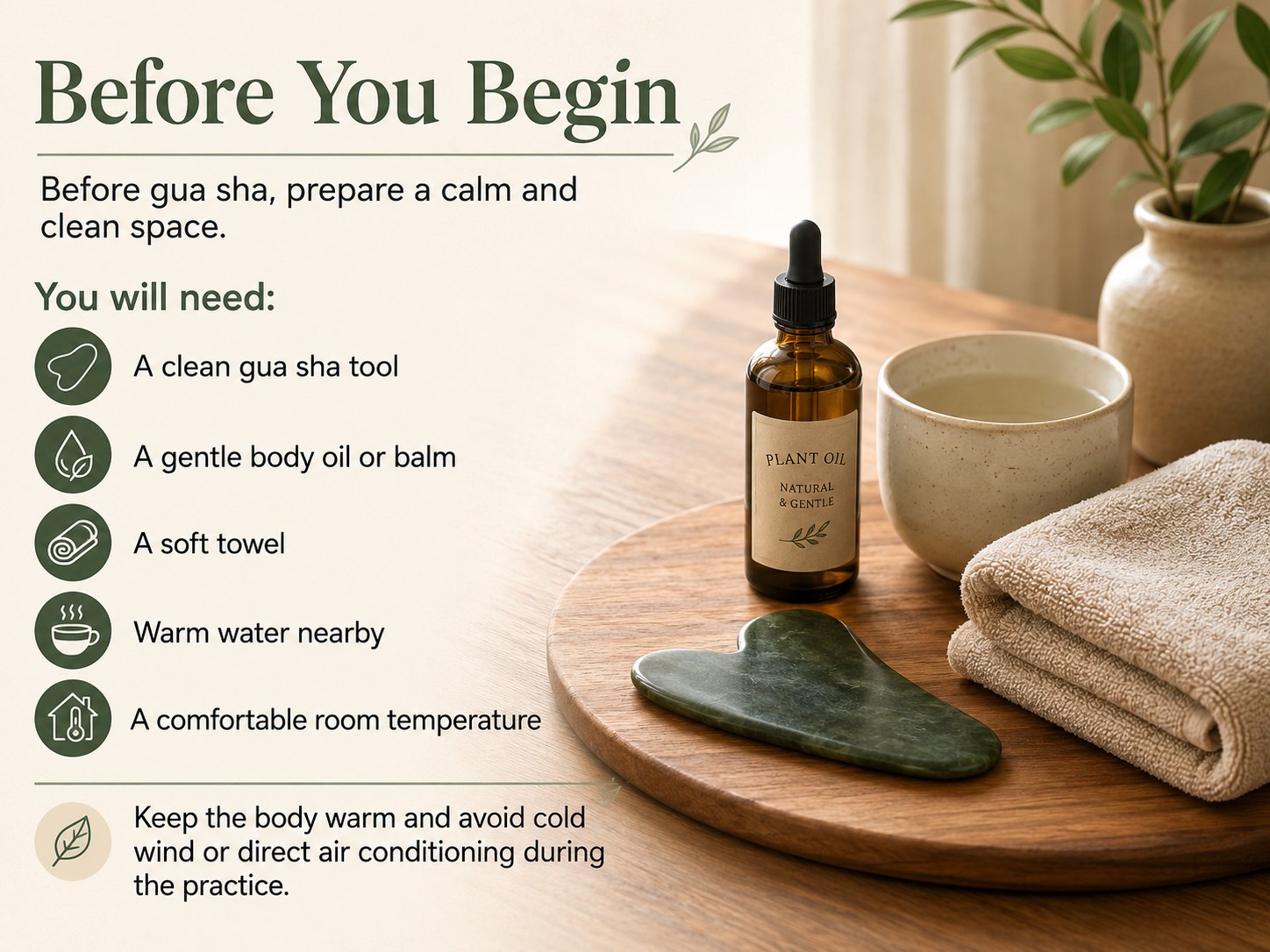
Before You Begin
Prepare a clean tool, gentle oil or balm, a soft towel, warm water, and a comfortable room temperature. Keep the body warm and avoid direct cold wind or air conditioning during the routine.
Basic Technique
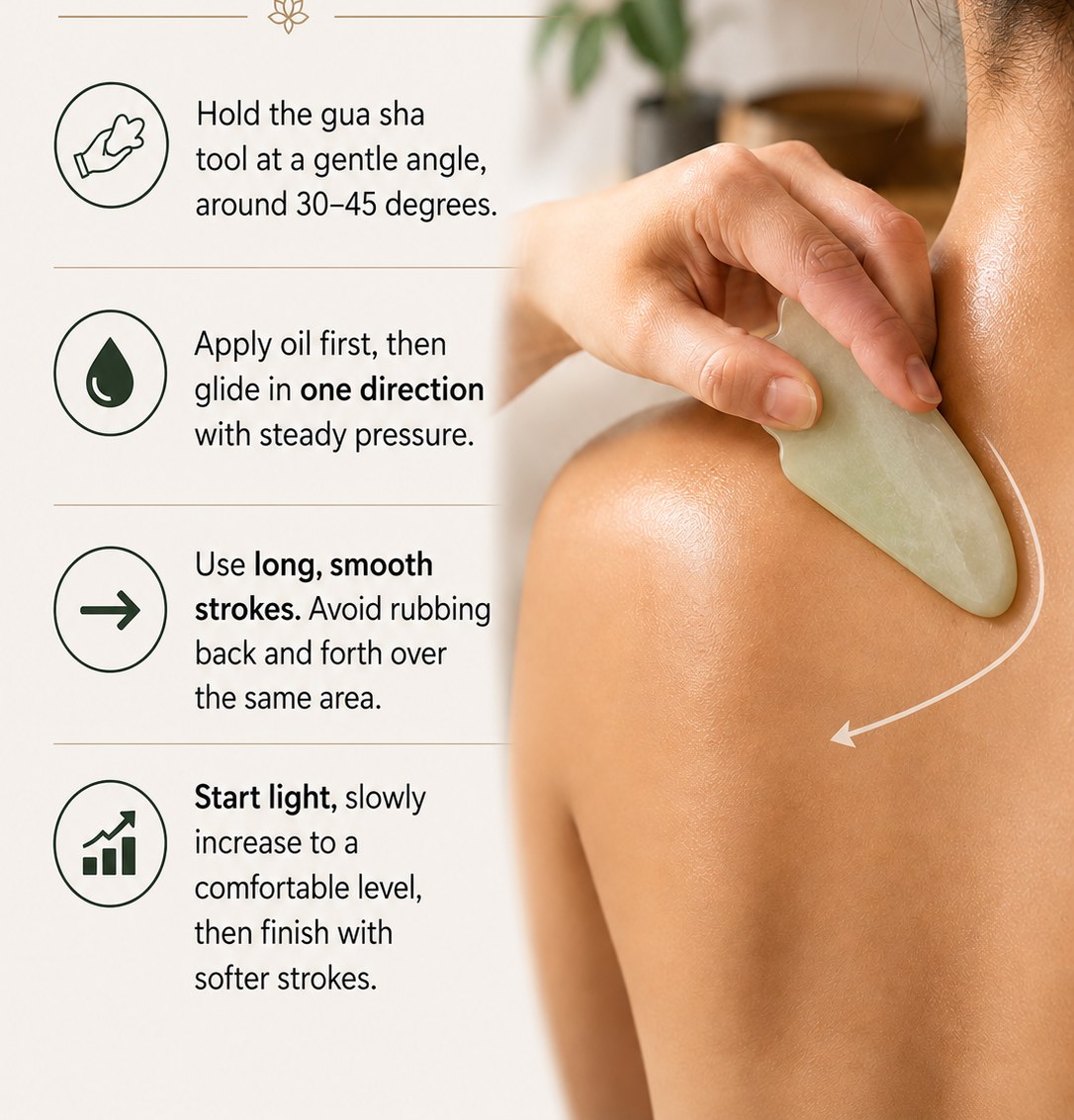
Hold the gua sha tool at a gentle angle of about 30-45 degrees. Apply oil first, then glide in one direction with steady pressure. Use long, smooth strokes and avoid rubbing back and forth over the same area.
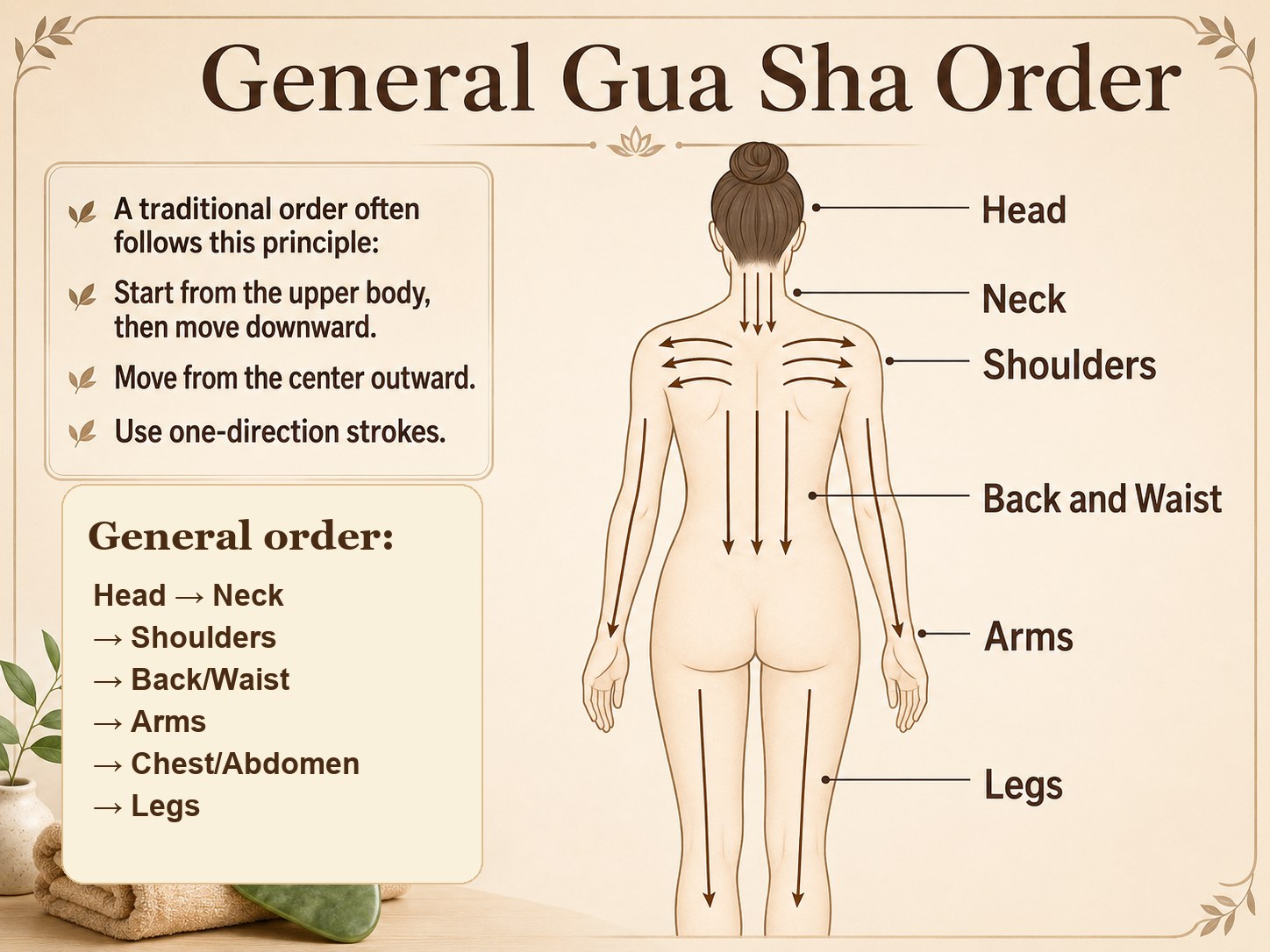
General Gua Sha Order
A beginner-friendly full-body order is: head, neck, shoulders, back and waist, arms, chest and abdomen, then legs. Work from upper areas downward and from the center outward.
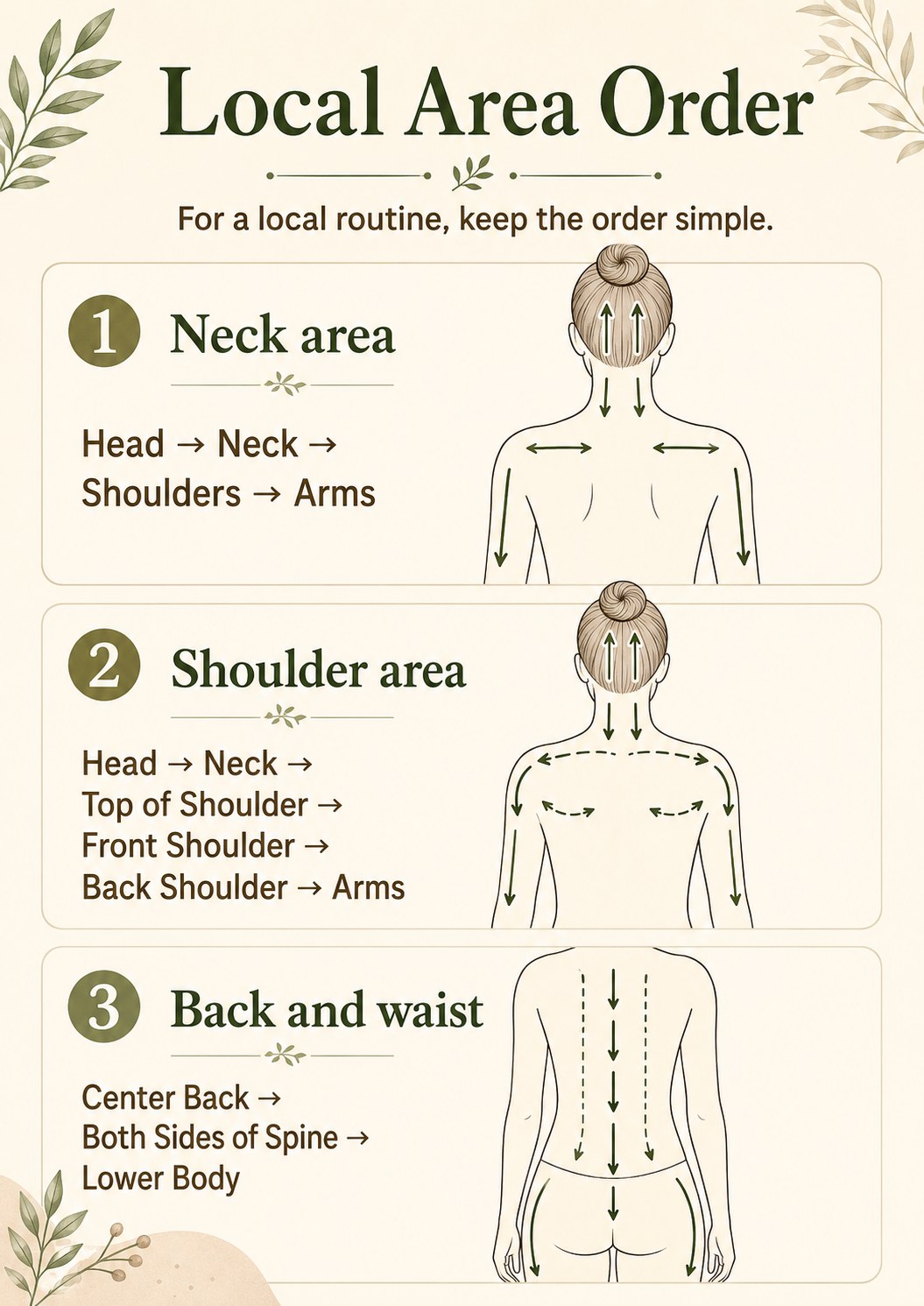
Local Area Order
For a local routine, keep the order simple. Neck routines move from head to neck, shoulders, and arms. Shoulder routines move from head and neck to the shoulder area and arms. Back and waist routines move from the center backline to both sides and then downward.
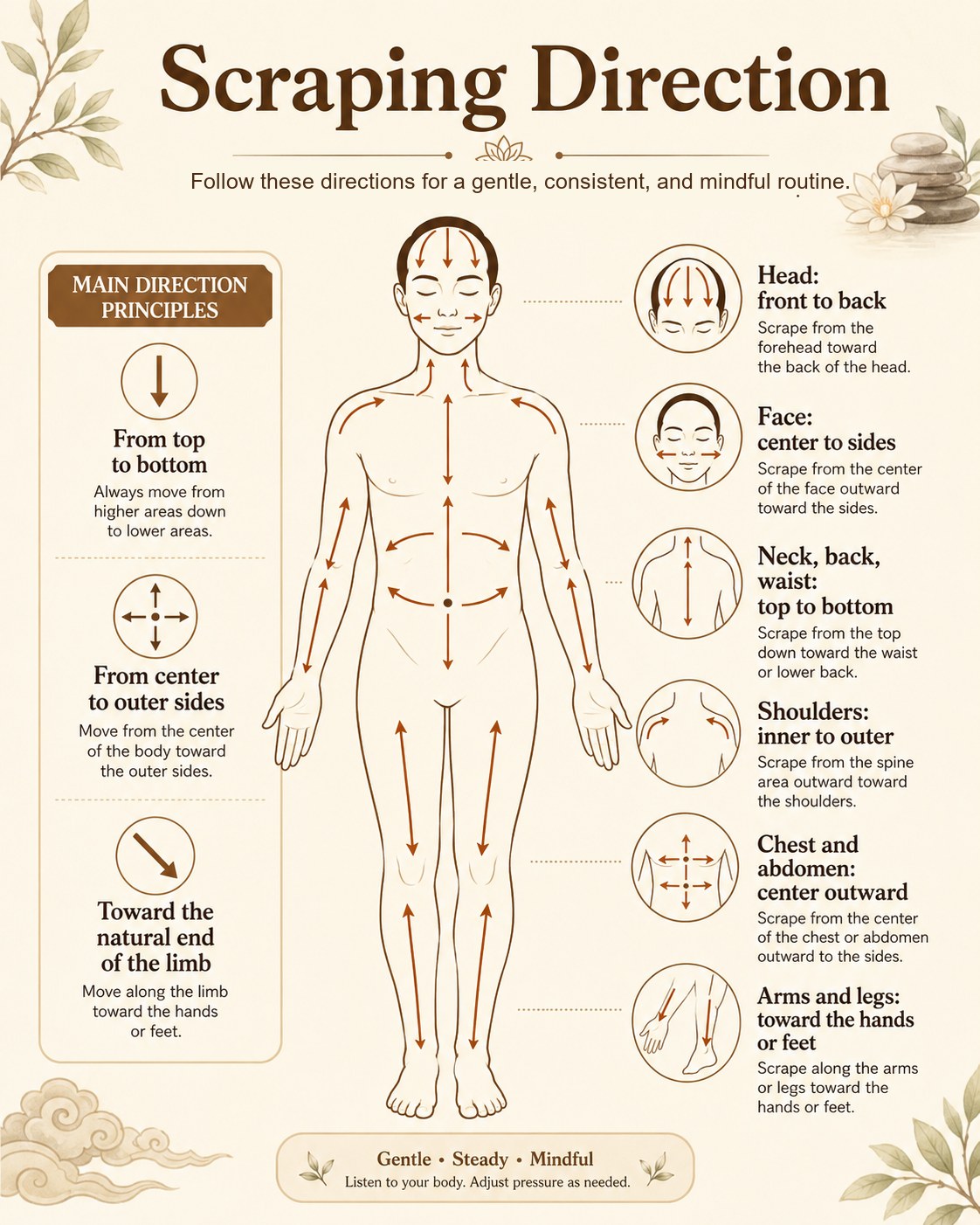
Gua Sha Direction
The general direction is top to bottom and center to outer sides. On arms and legs, glide toward the natural end of the limb. Keep strokes one-directional instead of rubbing back and forth.
Pressure and Timing
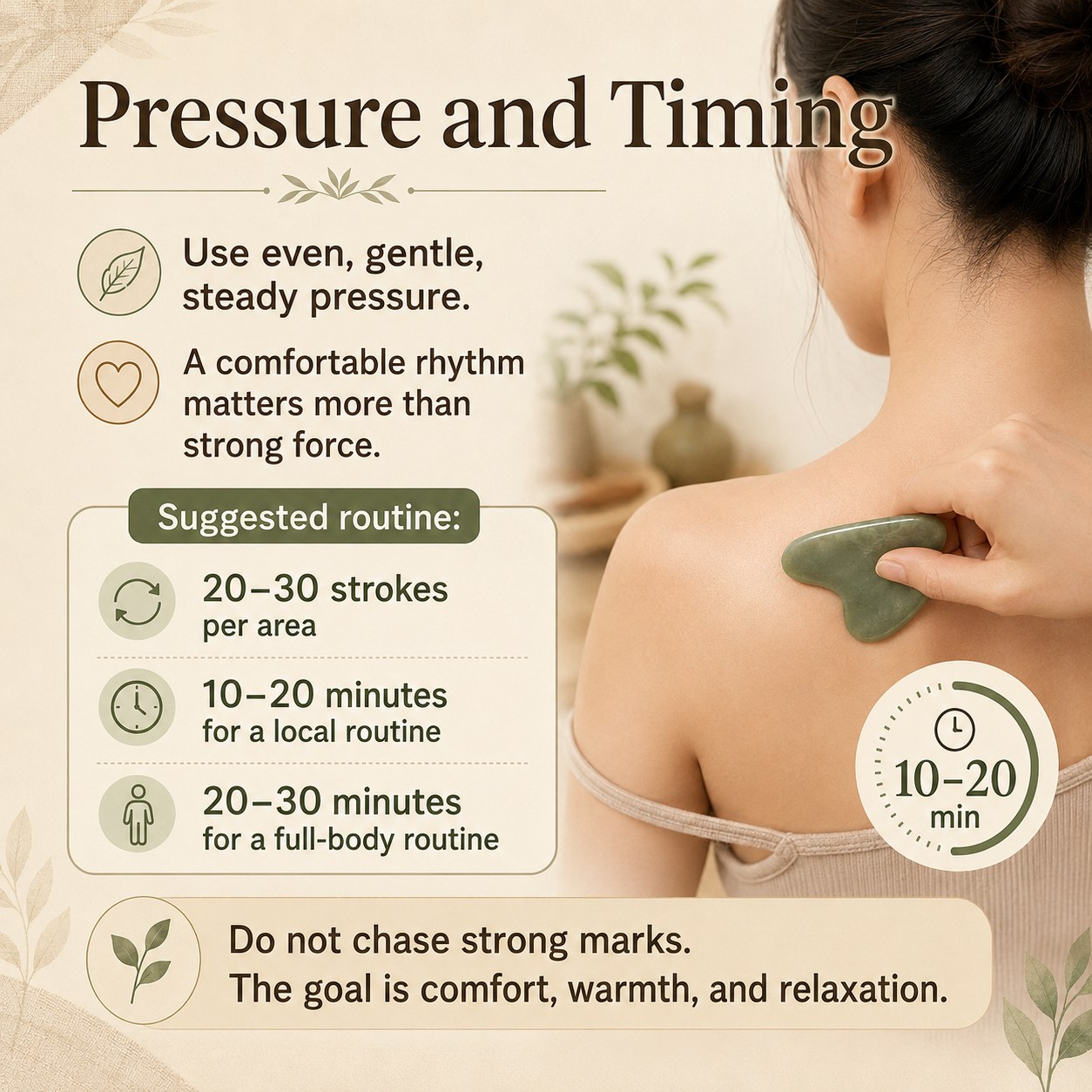
Use even, gentle, steady pressure. A common beginner-friendly range is 20-30 strokes per area, 10-20 minutes for a local routine, and 20-30 minutes for a full-body routine. Do not chase strong marks.
Aftercare
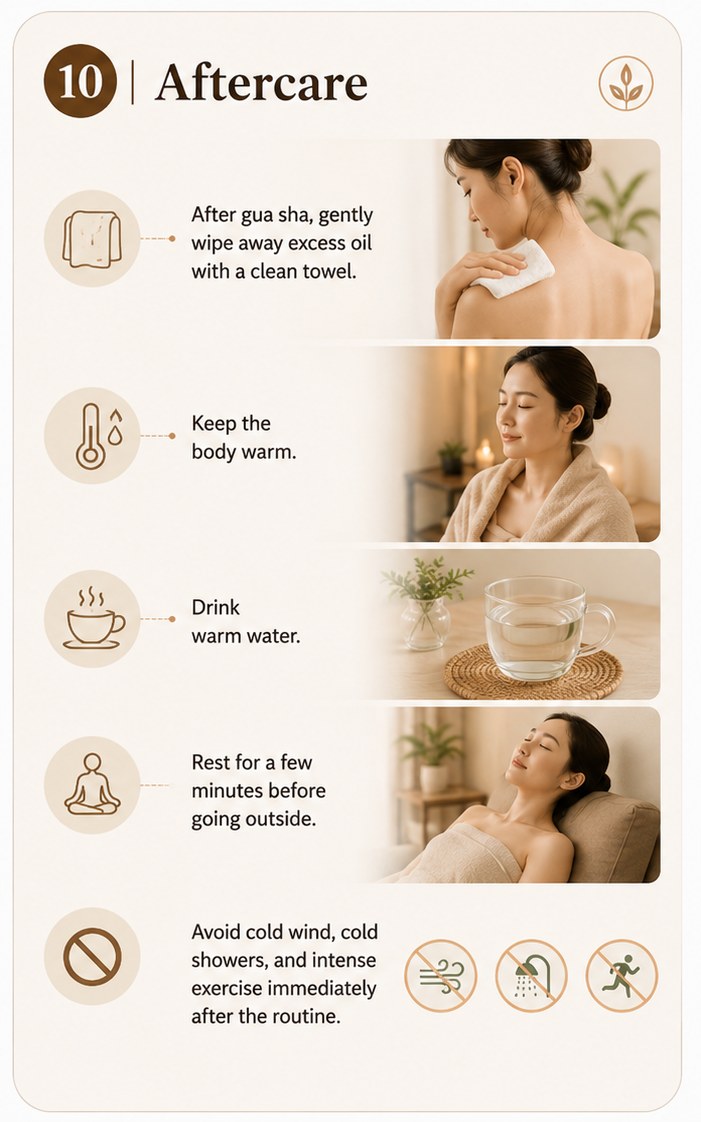
After gua sha, gently wipe away excess oil, keep the body warm, drink warm water, and rest for a few minutes. Avoid cold wind, cold showers, and intense exercise immediately after the routine.
If You Feel Dizzy
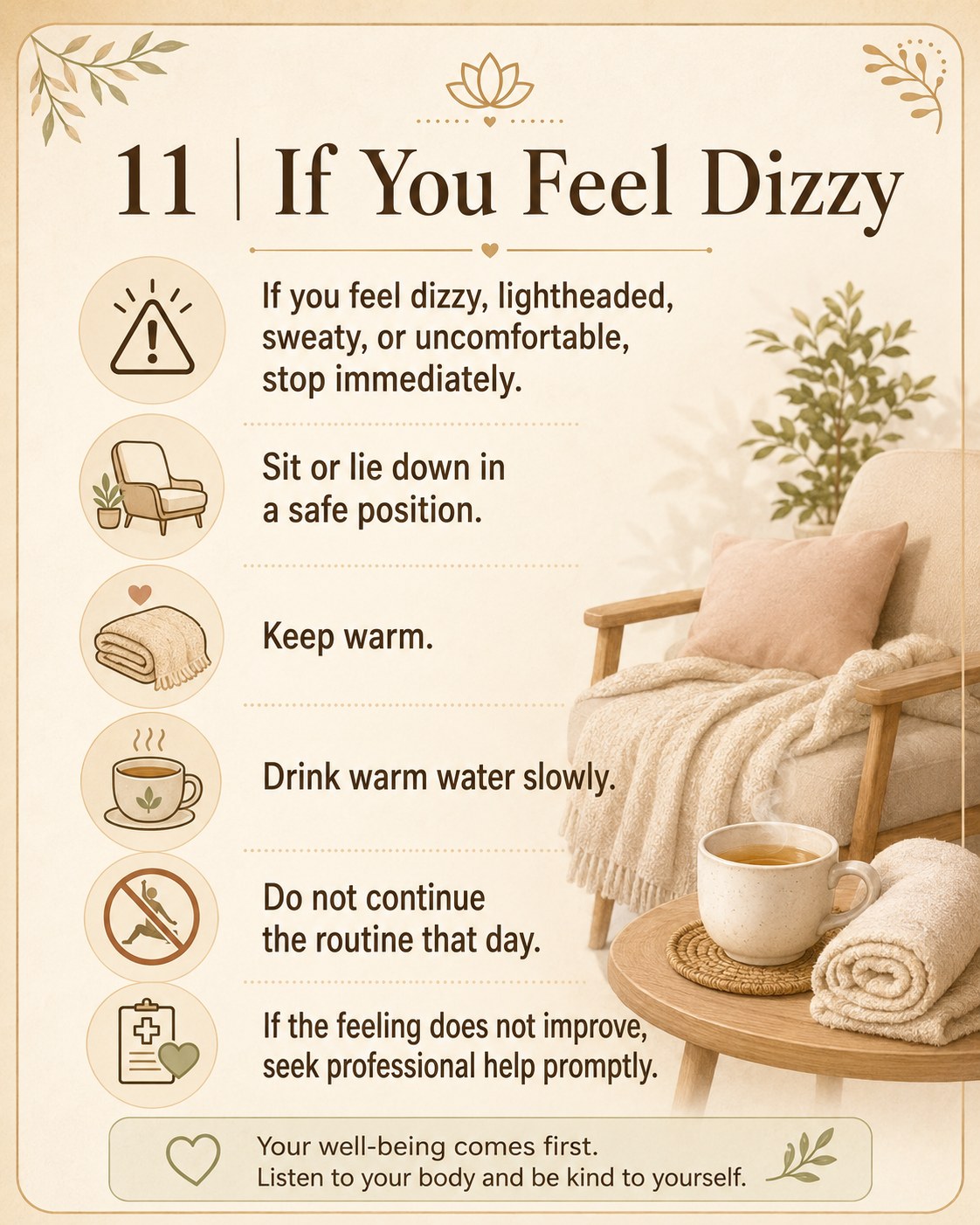
If you feel dizzy, lightheaded, sweaty, or uncomfortable, stop immediately. Sit or lie down in a safe position, keep warm, drink warm water slowly, and do not continue the routine that day. If the feeling does not improve, seek professional help promptly.
Clean Tools, Calm Practice
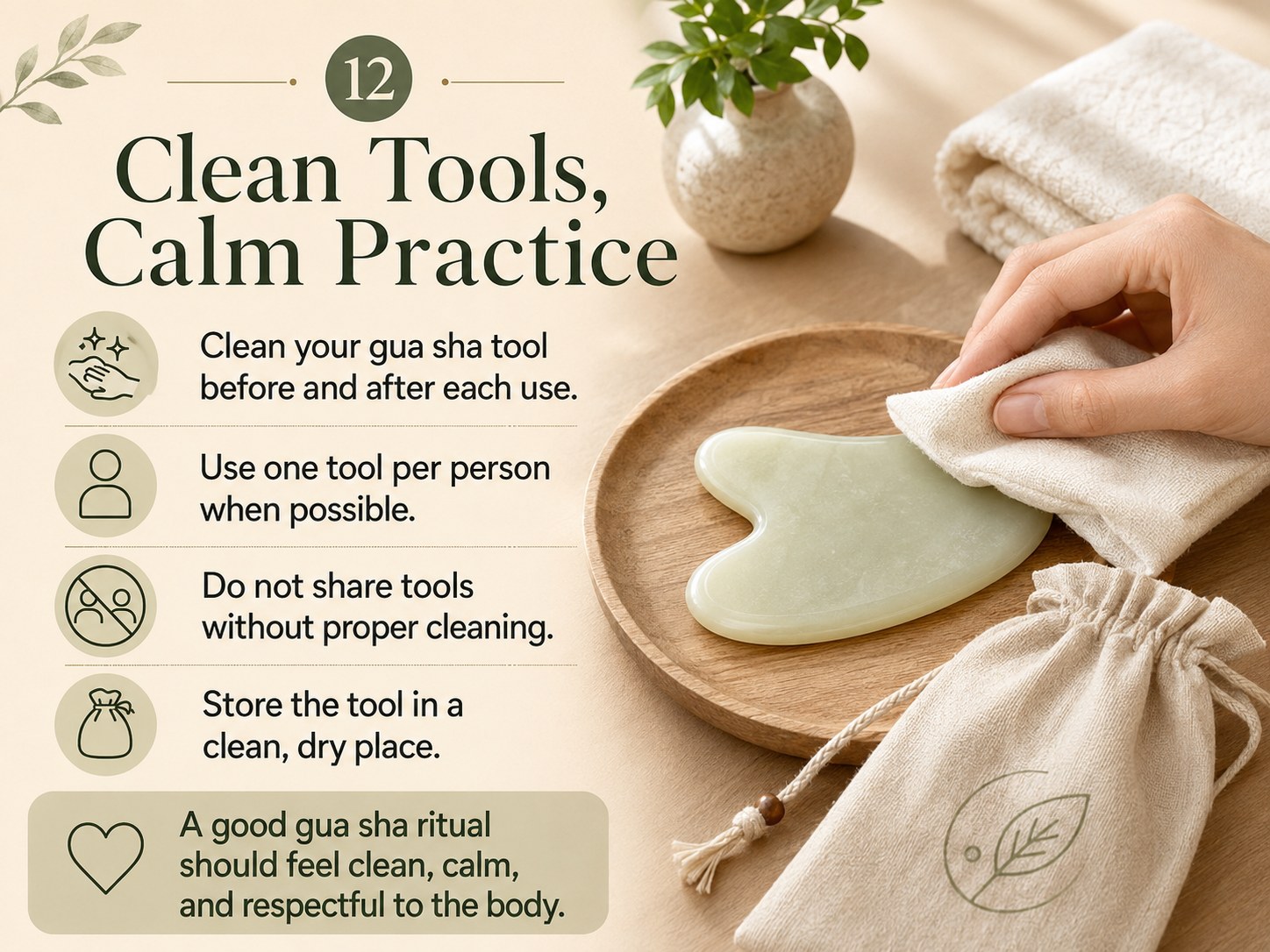
Clean your gua sha tool before and after each use. Use one tool per person when possible, avoid sharing without proper cleaning, and store the tool in a clean, dry place.
Gua Sha FAQ
Should gua sha feel painful?
No. A beginner-friendly routine should feel controlled, steady, and comfortable. Strong force is not the goal.
How often should I do gua sha?
Start gently and give the skin time to return to normal before another routine. Keep the rhythm simple and listen to your body.
Can beginners use gua sha at home?
Yes, for gentle daily self-care. Use a clean tool, a suitable oil or balm, slow one-direction strokes, and stop if anything feels uncomfortable.