TCM Cultural Basics
Qi: The Invisible Rhythm of Everyday Wellness
In traditional Chinese wellness culture, Qi is often described as the subtle movement that keeps life active, warm, responsive, and connected. It is not something most people try to see directly. Instead, Qi is understood through everyday signs: breath, energy, mood, warmth, appetite, sleep rhythm, and the way the body responds to the seasons.
This guide introduces Qi in a simple, modern way so beginners can understand the idea without turning it into something mysterious or clinical.
What Qi Means
Qi Is Movement, Warmth, and Connection
From a TCM perspective, Qi is a refined, active force that moves throughout the body. Classical language says Qi warms, guards, holds, and moves. In everyday terms, it helps explain why the body can feel open or blocked, calm or restless, warm or cold, steady or scattered.
Qi is closely connected with blood, body fluids, organs, and meridians in traditional theory. When Qi moves smoothly, daily life often feels more settled. When Qi feels stuck, low, sinking, or moving in the wrong direction, TCM culture uses these patterns as a way to describe body signals.
Traditional Pattern Language
Four Common Ways TCM Talks About Qi
These are cultural pattern words, not self-diagnosis labels. They are useful because they give beginners a vocabulary for observing body rhythm with more care.
Qi Deficiency
Often described as low drive, easy tiredness, short breath, or a sense of not having enough inner support.
Qi Stagnation
Often linked with tightness, emotional pressure, chest or side-body fullness, and a feeling that things are not flowing.
Qi Sinking
A traditional term for a downward, unsupported feeling, often discussed with posture, core strength, and daily vitality.
Qi Counterflow
A way to describe upward or unsettled movement, such as a restless upper-body feeling or disturbed rhythm.

Daily Emotional Rhythm
Start With the Mind and Breath
Classical TCM places great importance on emotional balance. A quiet mind, fewer excess desires, steady work, and simple daily satisfaction are all part of keeping Qi smooth in traditional wellness thinking.
Modern daily life can make emotions build up. Rather than forcing calm, it helps to release pressure in ordinary ways: talking with someone you trust, writing things down, crying when needed, taking a walk, breathing slowly, or getting professional support when life feels too heavy.
Simple Body Practice
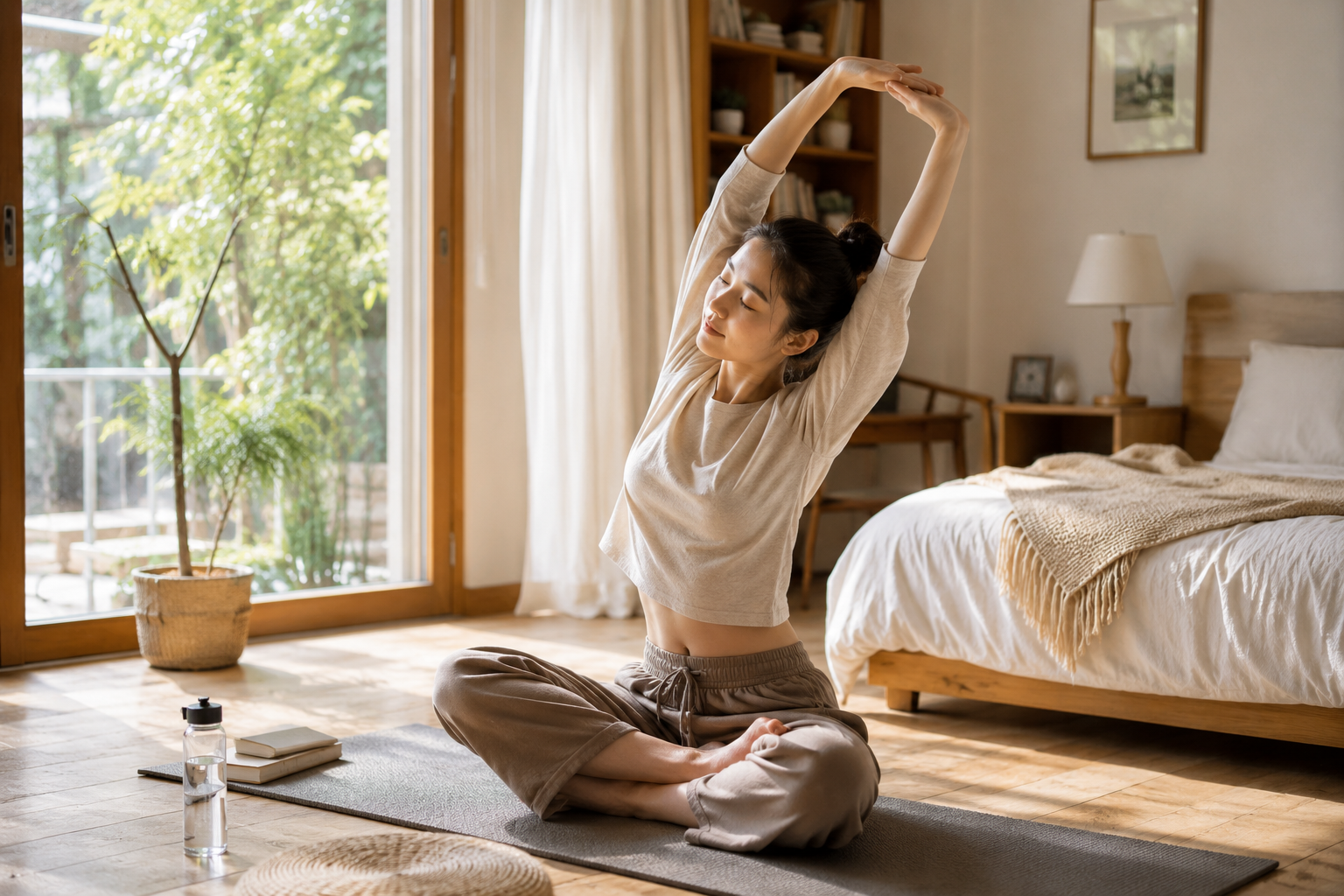
Gentle Stretching Helps the Body Feel Open
A simple reclining leg stretch is often used in daily wellness routines. Lie on your back, keep one leg raised toward the ceiling, and let the other leg bend comfortably. Keep the hips relaxed and breathe naturally. Hold only within a comfortable range, then switch sides.
The purpose is not to push hard. It is to give the body time, create space through the legs and back, and notice how the breath changes when the body softens.
Food and Seasonal Living
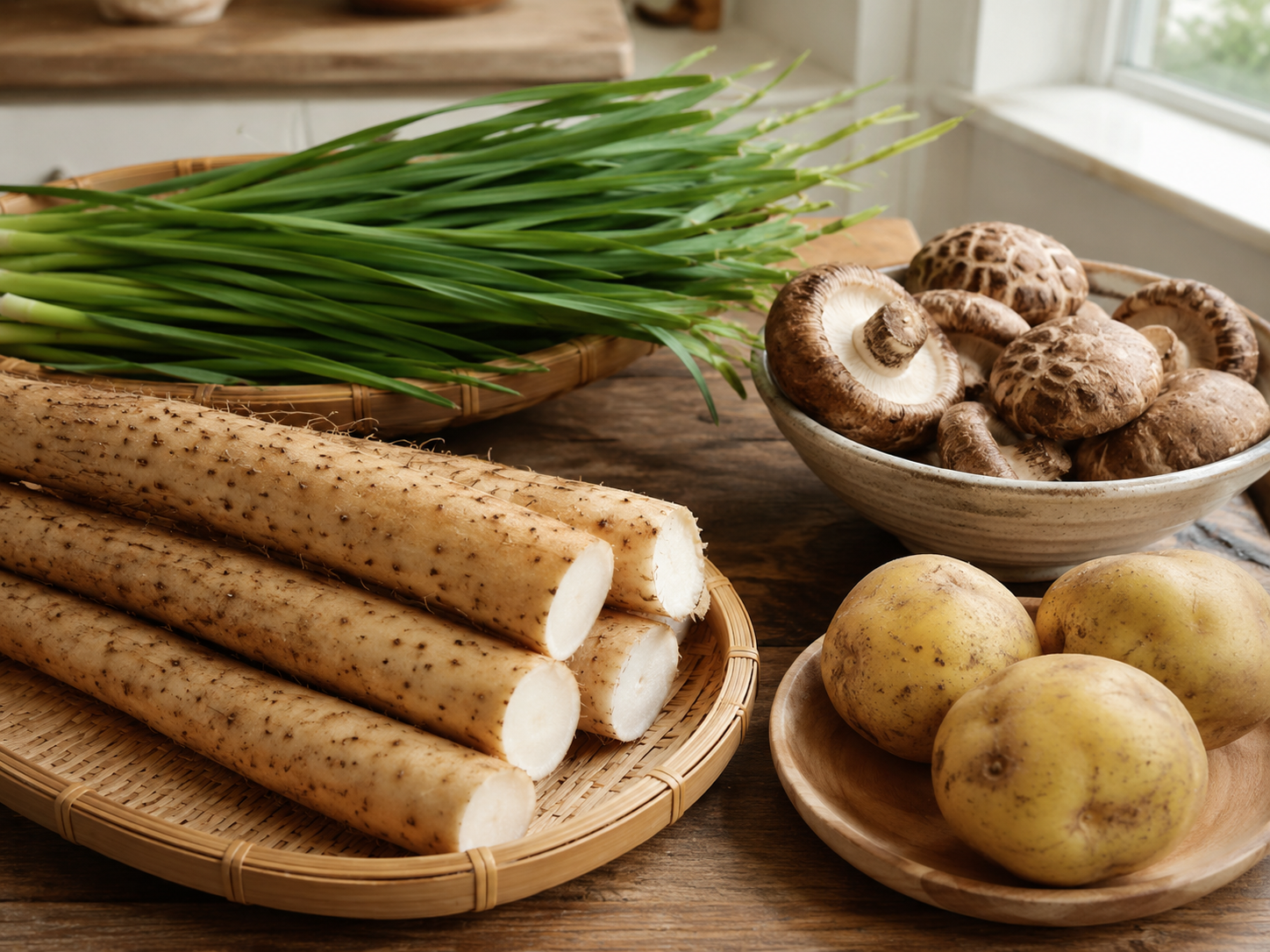
Foods Traditionally Associated With Supporting Qi
TCM food culture does not look only at calories or flavor. It also looks at warmth, texture, season, and how food fits a person’s daily rhythm. The following foods are commonly mentioned in traditional wellness literature as gentle everyday choices.
Qi FAQ
Is Qi the same as energy?
Energy is a helpful modern word, but Qi is broader in TCM culture. It includes movement, warmth, function, rhythm, and connection.
Can I feel Qi in daily life?
Many people understand Qi through ordinary body awareness: breath, warmth, mood, digestion rhythm, sleep rhythm, and how open or tense the body feels.
What is the easiest way to begin?
Start with simple habits: breathe slowly, keep a regular routine, move gently, eat warm simple meals, and notice how your body responds.