The Three Fu Days (San Fu Tian) are traditionally considered the hottest and most humid period of the year in the Chinese seasonal calendar. In traditional Chinese wellness culture, this midsummer window is often used as a reminder to adjust diet, daily rhythm, hydration, rest, and gentle self-care habits.
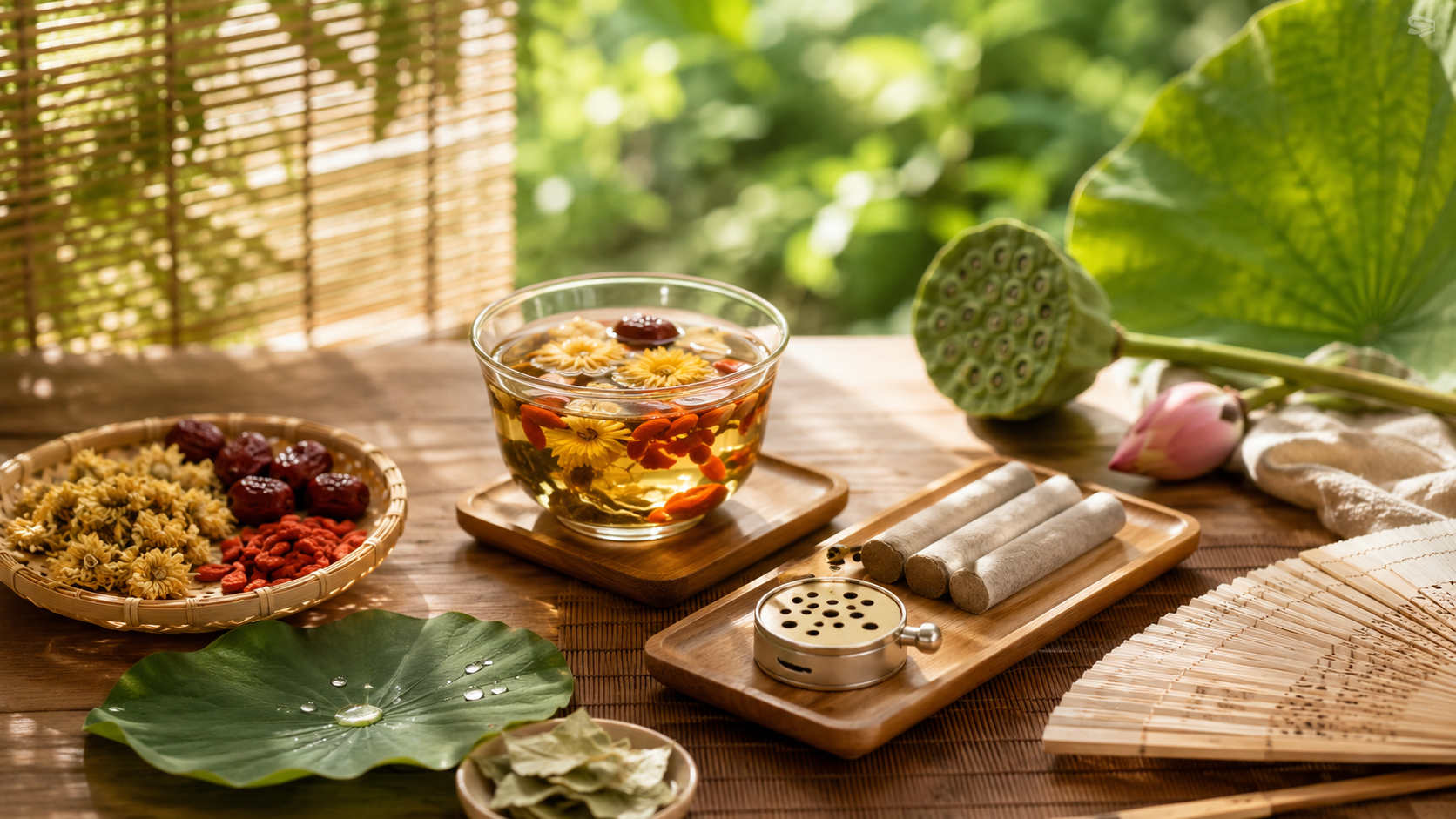
This guide introduces the 2026 Three Fu Days calendar and a practical, wellness-oriented way to understand seasonal food, body care, and traditional self-care tools. It is written for educational and cultural reference, not as medical advice.
2026 Three Fu Days Calendar
In 2026, the San Fu period is commonly understood as a 40-day midsummer phase divided into three main stages. Many traditional wellness schedules also include a Pre-Fu preparation session and a reinforcement session during the longer Middle Fu period.
| Stage | 2026 Date / Period | Traditional Wellness Focus |
|---|---|---|
| Pre-Fu Preparation | July 5, 2026 (Sun) | Gentle preparation and seasonal adjustment |
| Initial Fu (Chu Fu) | July 15 – July 24, 2026 | Beginning of peak summer heat |
| Middle Fu (Zhong Fu) | July 25 – August 13, 2026 | Longer hot and humid phase; steady routine and hydration |
| Middle Fu Reinforcement | August 4, 2026 (Tue) | Optional traditional wellness reference point |
| Final Fu (Mo Fu) | August 14 – August 23, 2026 | Late-summer transition and gentle recovery |
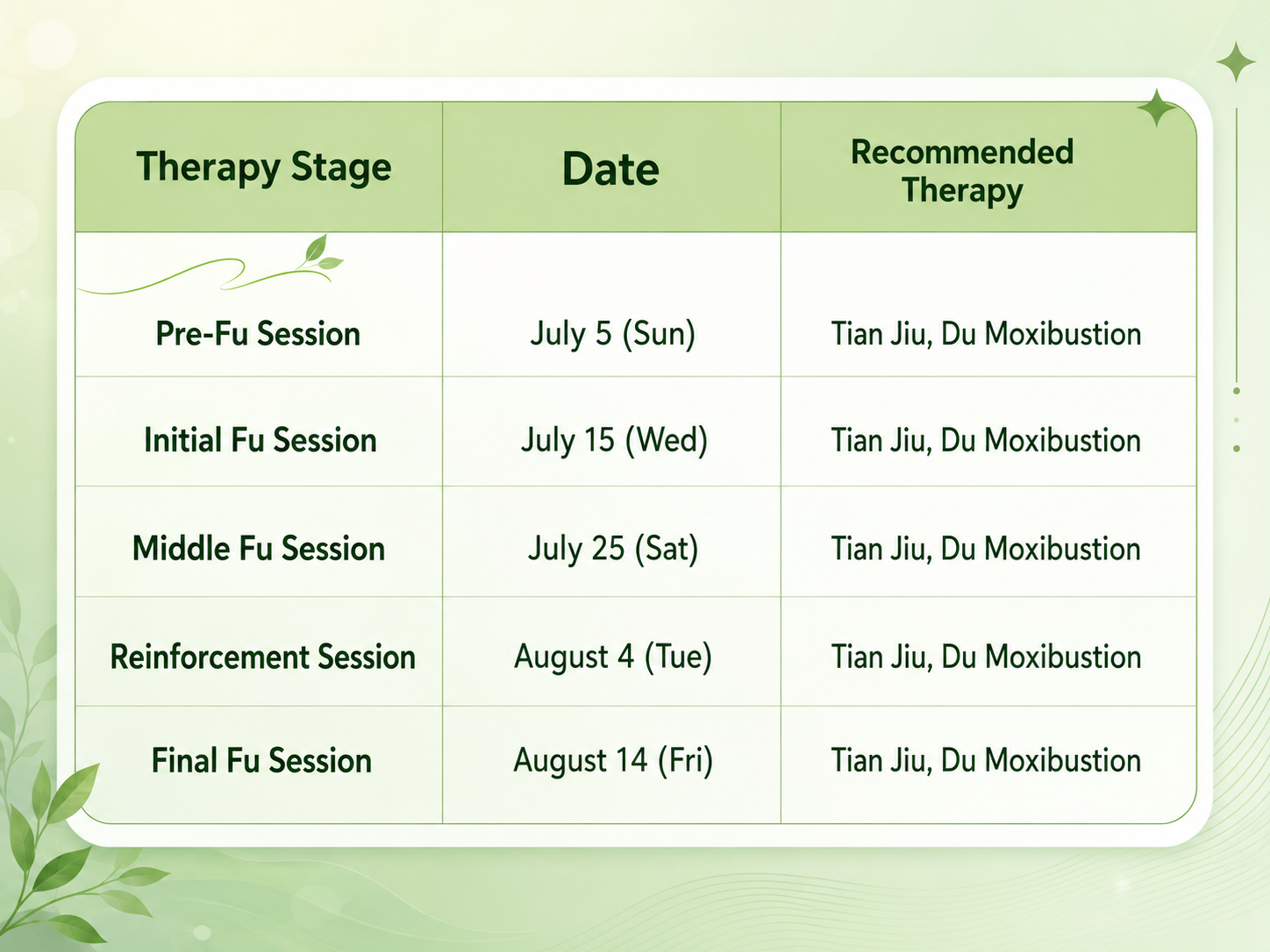
Note: The visual schedule above reflects traditional seasonal wellness planning. The words “therapy” or “moxibustion” in traditional cultural materials should be understood here as wellness references rather than medical treatment claims.
Seasonal Characteristics of the Three Fu Period
During San Fu Tian, the weather is usually marked by high temperature, strong humidity, and a feeling of heaviness or fatigue. In traditional Chinese wellness thinking, this is a time to avoid extremes: not too greasy, not too cold, not too intense, and not too irregular.
- High heat and humidity may make the body feel heavier or more tired.
- Hydration and light meals become especially important.
- Rest, emotional balance, and moderate movement are emphasized.
- Traditional practices often focus on warmth, circulation, and seasonal adjustment.
1. Dietary Considerations During San Fu Tian
Traditional seasonal dietary advice generally focuses on light, hydrating, and easily digestible foods. The goal is not extreme restriction, but simple balance during the hottest days of the year.
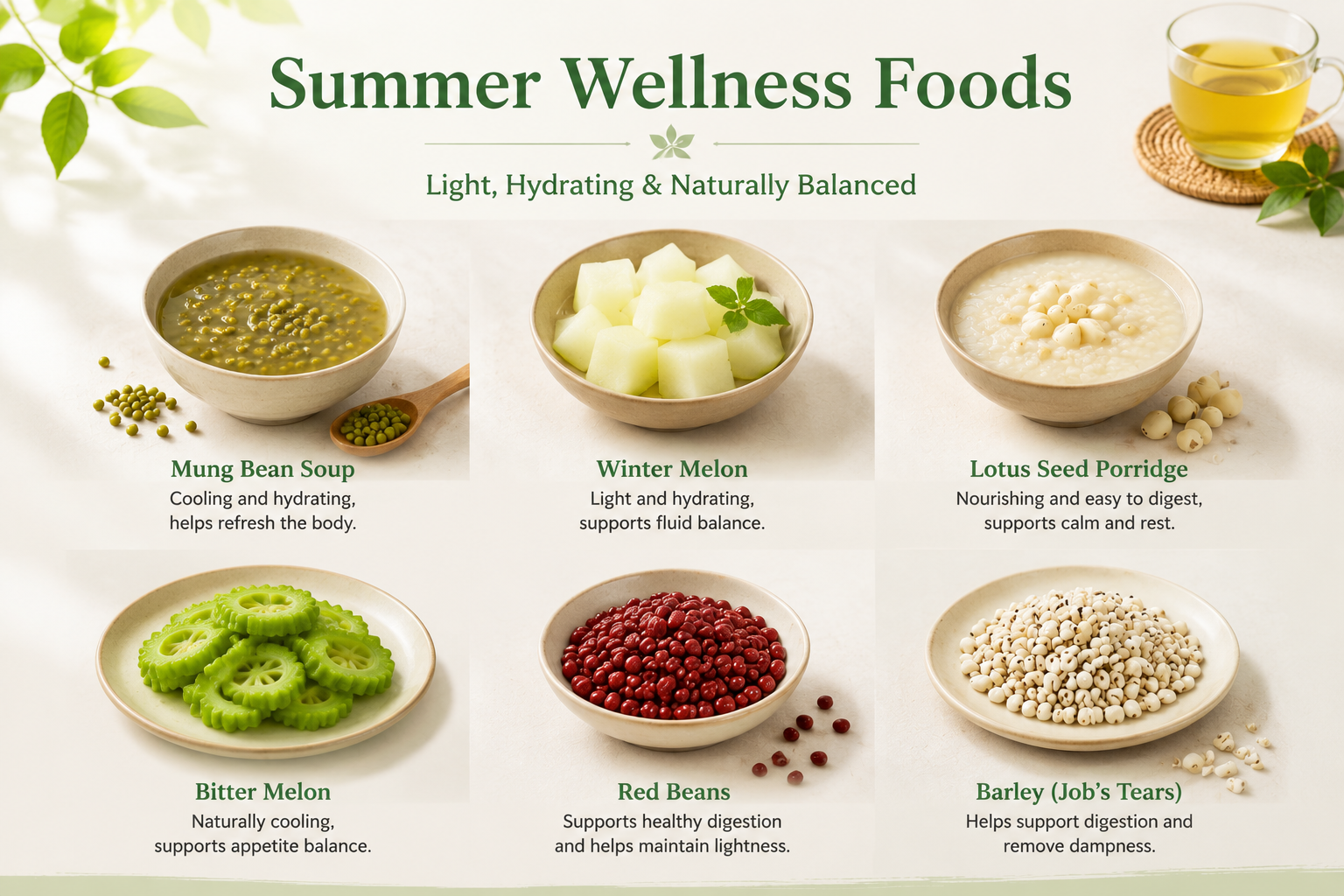
Commonly referenced seasonal foods
- Mung bean soup or mung bean porridge
- Winter melon dishes or soup
- Lotus seed porridge
- Bitter melon
- Red beans
- Job’s tears, also known as coix seed or Chinese pearl barley
- Fresh seasonal vegetables and fruits
Foods often limited during this period
- Very greasy or heavy meals
- Excessively spicy dishes
- Highly processed foods
- Too many iced drinks, especially when the body already feels uncomfortable
2. Seasonal Vegetables in Traditional Dietary Practice
Two vegetables are often mentioned in summer wellness culture:
Bitter melon
Bitter melon is commonly used in summer cooking and is traditionally associated with a naturally cooling culinary profile. It may be stir-fried, cooked in soup, or paired with lighter ingredients.
Luffa / sponge gourd
Luffa is light, soft, and easy to digest. It is frequently used in East Asian summer cooking and fits well into a gentle seasonal diet.
3. Emotional Balance and Rest
In Traditional Chinese Medicine theory, summer is often associated with the Heart system and emotional activity. From a modern wellness perspective, hot weather can also affect sleep quality, patience, and mental energy.
- Keep a stable daily routine.
- Allow short rest periods when possible.
- Avoid excessive emotional stress and overwork.
- Create a calm environment before sleep.
4. Body Care During Humid Summer Conditions
When humidity feels heavy, gentle body care may help create a sense of comfort and routine. Keep the approach moderate and listen to your body.
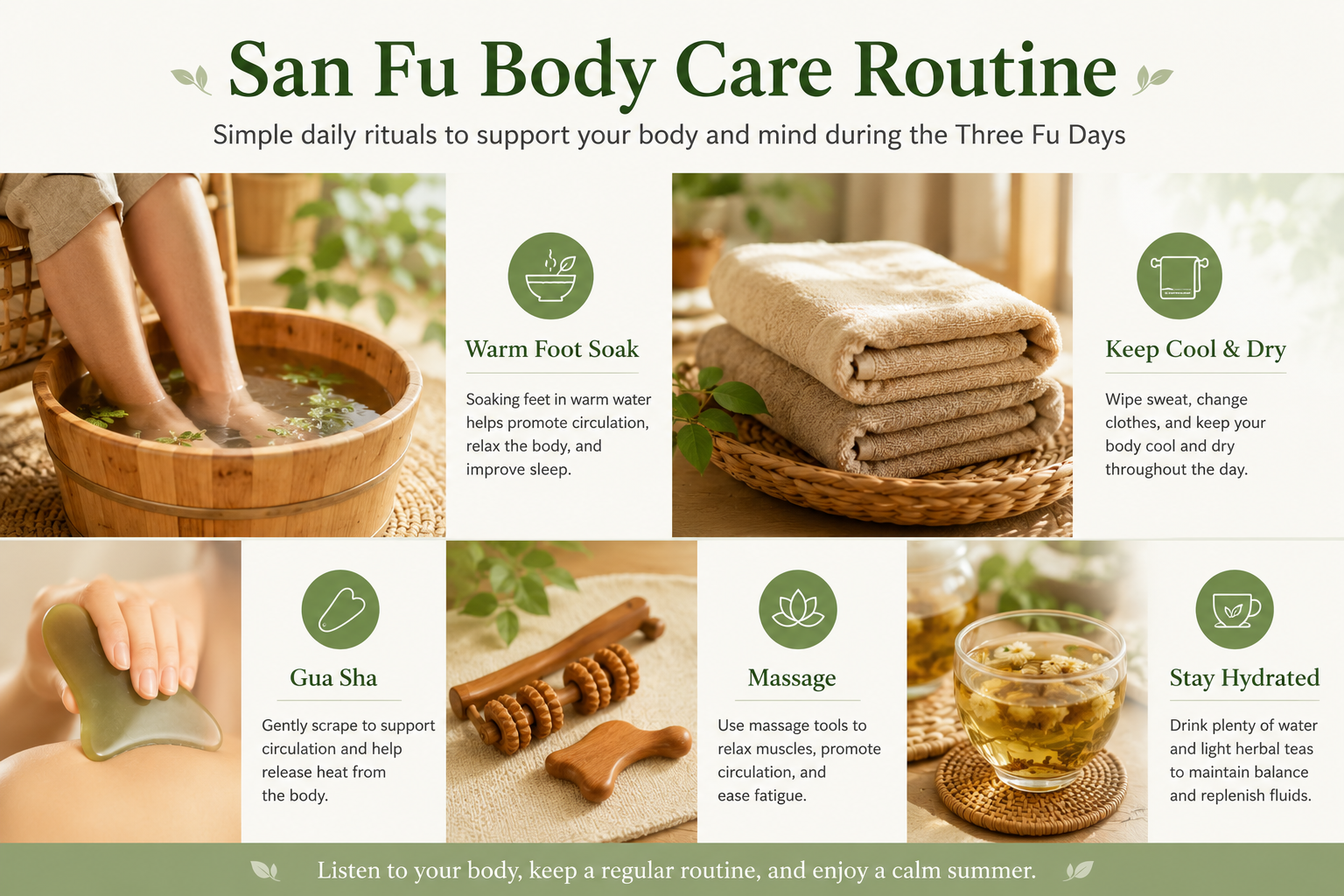
Simple evening self-care ideas
- Warm water foot soaking for relaxation
- Light shoulder, neck, or leg massage
- Gentle gua sha on suitable areas with appropriate oil
- Light stretching or slow walking
- Hydration with water or mild herbal tea
Warm foot soaking is a common relaxation method in many cultures. During summer, keep the water comfortably warm rather than hot, and stop if you feel dizzy, overheated, or uncomfortable.
5. Traditional Seasonal Wellness Practices
Several traditional external practices are commonly referenced in San Fu Tian culture, including San Fu plaster, moxibustion, cupping, and acupoint-based seasonal routines.
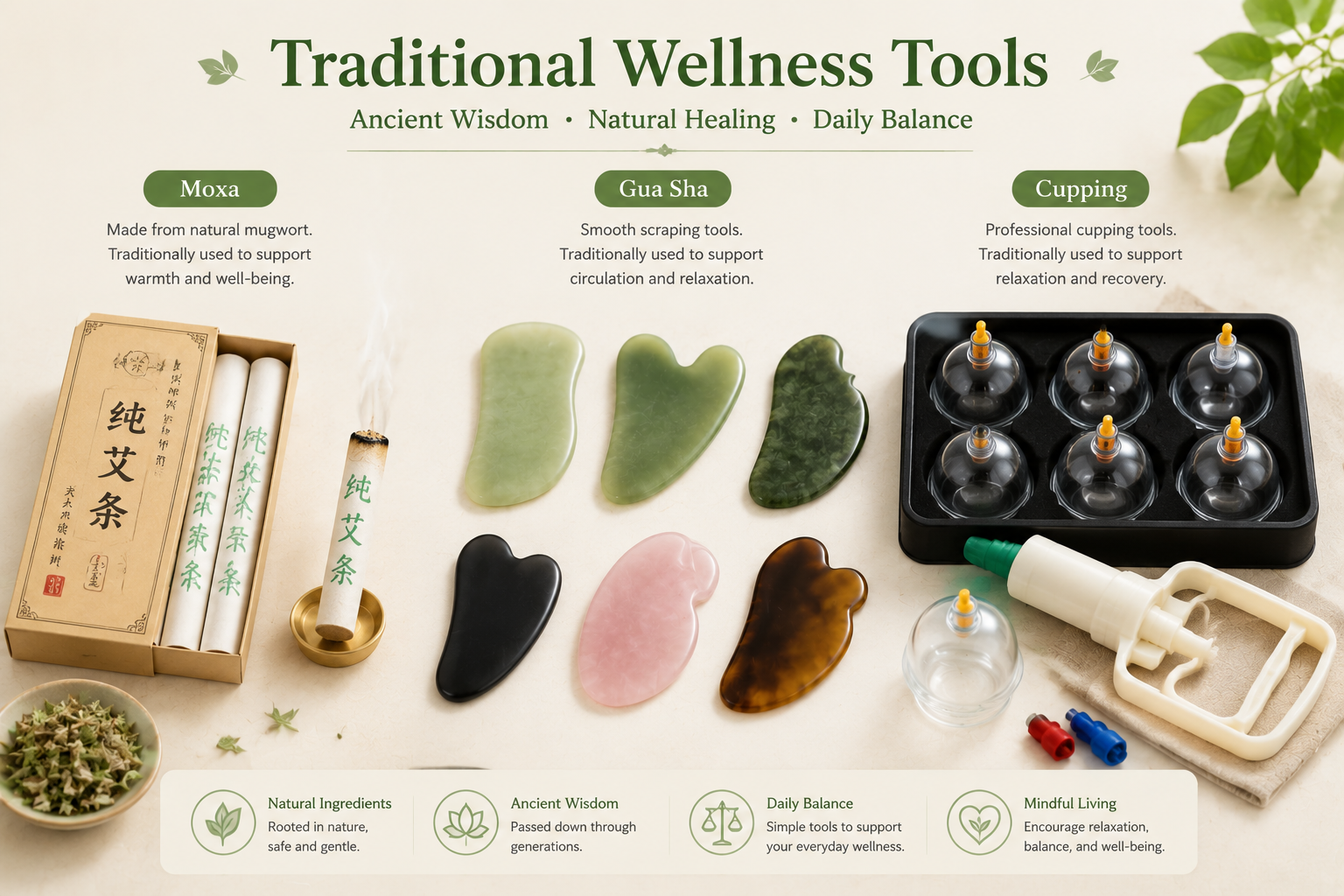
These methods are part of traditional wellness culture. They should be approached with caution, proper instruction, and respect for individual health conditions.
Commonly referenced tools and practices
- Moxa / moxibustion: traditionally associated with warming practices and seasonal adjustment.
- Gua sha: a scraping-based self-care tool used gently with oil for relaxation and body comfort.
- Cupping tools: traditionally used for bodywork routines; should be used carefully and moderately.
- Foot bath herbs: often used in evening routines for relaxation and comfort.
6. Daily Movement During the Three Fu Days
Traditional wellness theory favors gentle, consistent movement during high summer rather than intense exertion under strong heat.
- Light walking in the morning or evening
- Gentle stretching
- Hand and foot mobility exercises
- Avoiding long periods of inactivity
- Avoiding heavy outdoor activity during peak heat
7. A Simple San Fu Daily Routine
Daytime
- Eat light, balanced meals.
- Drink water regularly.
- Avoid prolonged exposure to overheating.
- Keep movement gentle and consistent.
Evening
- Try a warm foot soak if suitable for you.
- Use light self-massage for the shoulders, neck, or legs.
- Keep the sleeping environment calm and comfortable.
- Enjoy a mild herbal tea if appropriate.
Conclusion
The Three Fu Days are a meaningful seasonal marker in the traditional Chinese calendar. Rather than intense intervention, San Fu wellness emphasizes moderation: lighter food, steady hydration, gentle movement, rest, and mindful self-care.
For ChinaQiWay, this season is also a way to reconnect with traditional wellness tools and cultural practices in a safe, modern, and practical way.
Medical Disclaimer
This article is for educational and traditional wellness reference only. It does not constitute medical advice, diagnosis, or treatment. Individuals who are pregnant, have cardiovascular conditions, skin conditions, circulatory issues, chronic illnesses, allergies, or other health concerns should consult qualified healthcare professionals before using wellness tools, moxibustion, cupping, herbal products, foot soaks, or other practices mentioned here.