
Office Wellness Routine
Office Neck and Shoulder Self-Care Routine: Which Wellness Tool Should You Start With?
For many office workers, neck and shoulder tension does not appear all at once. It builds through small daily habits: leaning toward a screen, sitting for long periods, holding the phone too often, working under air conditioning, and staying mentally busy for hours.
A useful routine should fit the real workday. Instead of waiting until the body feels heavy at night, this guide divides neck and shoulder care into two parts: daytime maintenance at the desk and a gentle evening wind-down at home.

Start Here
Begin With Posture Awareness, Not Gua Sha
When the shoulders keep rolling forward during the day, an evening routine can only do so much. That is why the first step for office neck and shoulder care is not scraping, tapping, or heat. It is posture awareness.
A posture support strap can be useful during computer work because it gives the body a gentle reminder. The goal is not to force the chest open or hold the body rigidly. The goal is to notice when the shoulders are collapsing forward and return to a more natural position.
How to use a posture support strap
- Use it during daytime work, writing, or computer time.
- Start with about 1 to 2 hours at a time.
- Keep the fit comfortable, not tight.
- Do not depend on it all day.
- Remove it if you notice numbness, strong marks, tingling, or discomfort.
- Do not wear it while sleeping.
A posture strap works best as a reminder tool. It should help you build awareness, not replace natural movement.

Daytime Warmth
Use Smokeless Portable Moxa for Gentle Daytime Warmth
Office environments can make the neck and upper back feel cool, tight, or heavy, especially when air conditioning blows directly toward the body. For people who already understand moxa products, a smokeless or low-smoke portable moxa warmer can be a practical daytime option.
The purpose is not strong heat. The better approach is a steady, comfortable warmth that supports a calmer shoulder and upper-back routine during work breaks or home-office time.
Good areas for gentle warmth
- Upper back around the shoulder blades
- The area below the base of the neck
- Shoulder-top areas that often feel cool under air conditioning
- Lower neck and upper back areas where clothing can protect the skin
Safety notes
- Use a dedicated moxa holder or warmer.
- Do not place burning moxa directly on bare skin.
- Keep the room gently ventilated.
- Never leave burning moxa unattended.
- Do not use while walking, sleeping, or in a meeting where you cannot monitor heat.
- Stop immediately if the area feels too hot or uncomfortable.

Quick Desk Break
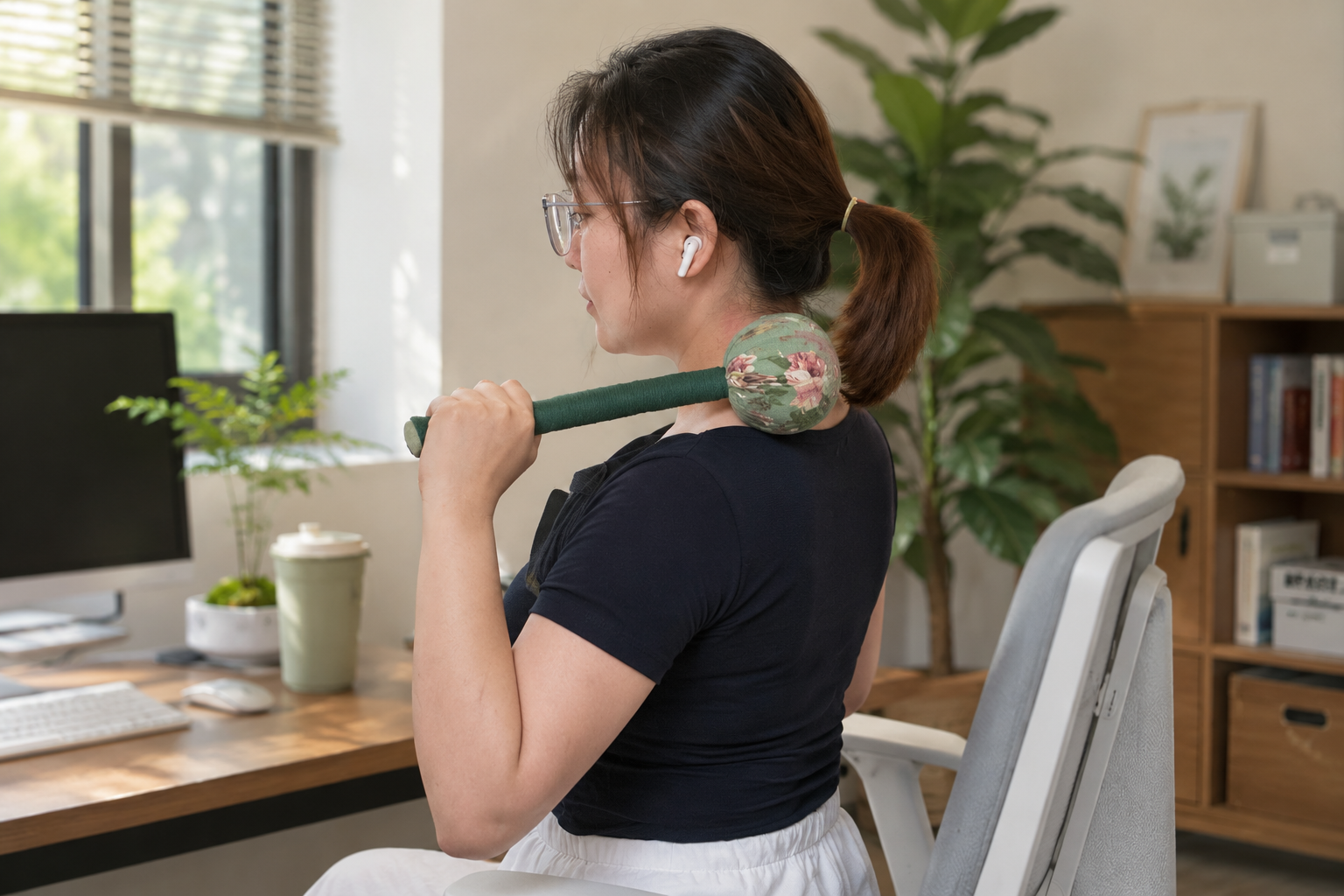
Keep a Massage Hammer for Short Shoulder and Back Breaks
A massage hammer is often easier to use at the office than gua sha. It does not require oil, it does not mark clothing, and it can be used for a short break when the shoulders begin to feel heavy after sitting.
Keep the rhythm light and steady. The goal is a comfortable tapping sensation, not a strong or sore feeling.
How to use it
- Tap gently over both shoulder tops.
- Move around the upper back and shoulder blade area.
- Avoid the center of the neck and spine.
- Avoid bony areas.
- Use it for 3 to 5 minutes at a time.
Optional Care
Gua Sha Is Optional, Not a Fixed Nightly Step
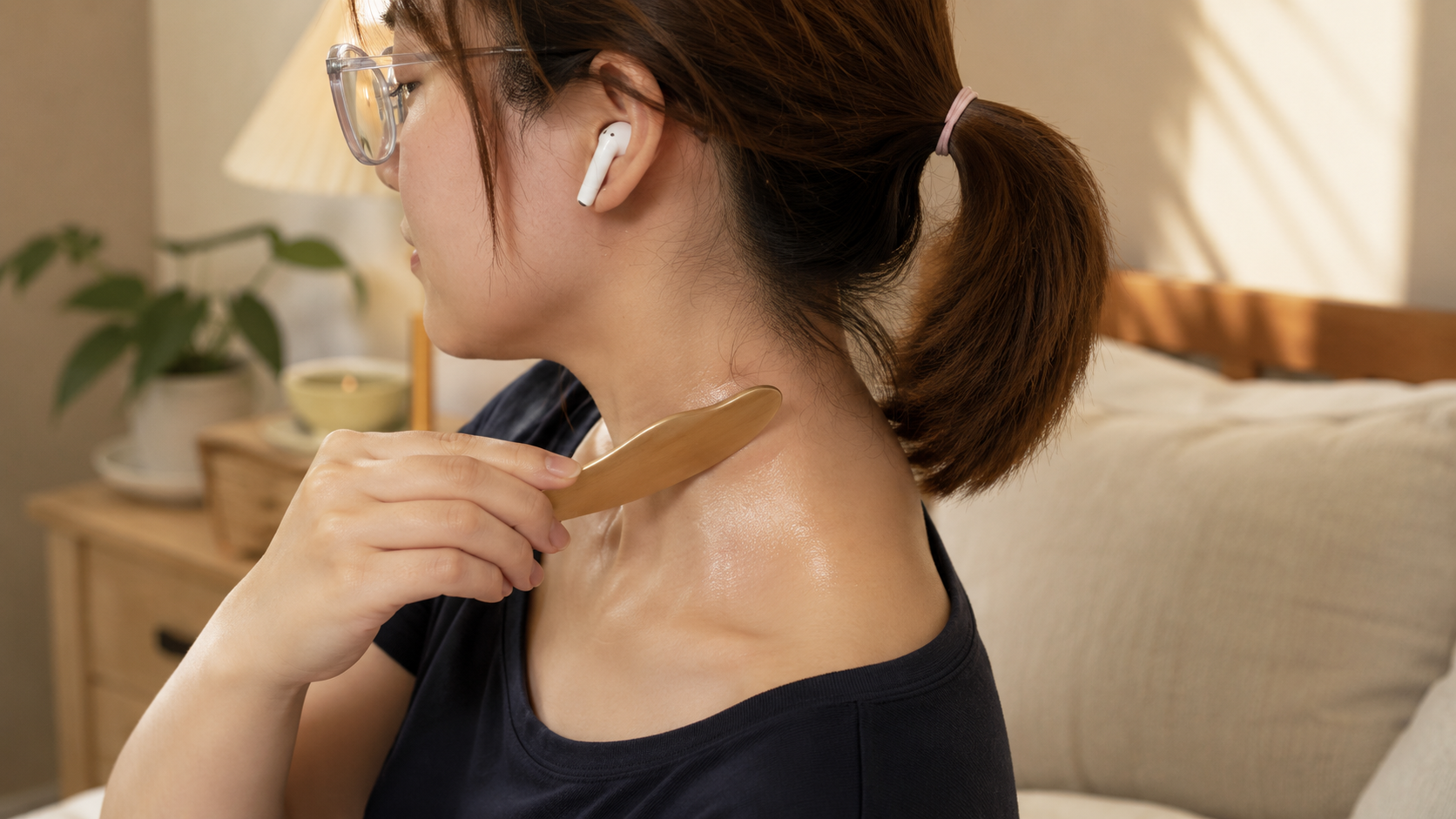
Gua sha can be part of a neck and shoulder self-care routine, but it is not suitable for everyone and it should not be treated as a required nightly habit. For office workers, light and occasional gua sha is more reasonable than heavy scraping every night.
If you choose to use gua sha, do it when the room is warm, the body feels stable, and you have enough time to rest afterward. Avoid using strong pressure right before bed if it makes your body feel too alert.
Gentle direction guide
- Apply a small amount of body oil or lotion first.
- Glide from the side of the neck toward the shoulder.
- Move from top to bottom.
- Move from the center outward around the shoulder area.
- Use one-direction strokes instead of rubbing back and forth.
- Keep each local area to about 10 to 20 light strokes.
- Do not chase strong marks.
When to avoid self-use or ask first
Do not use gua sha on broken, irritated, allergic, or infected skin. Avoid self-use, or ask a qualified professional first, if you have low platelets, clotting concerns, frequent bruising or bleeding, use blood-thinning medication, are pregnant, are menstruating, feel dizzy or weak, have a fever, or have a special health situation involving the heart, blood vessels, liver, kidneys, or another ongoing medical concern.
Evening Close
At Night, Choose Warm Compress, Screen Breaks, and Tea
After a full workday, the evening routine should be gentle. This is the time to move away from strong stimulation and help the body shift into a calmer pace.
Step 1: Put the phone down
About 20 to 30 minutes before bed, place the phone away from your body. Let the eyes, neck, and shoulders leave screen mode.
Step 2: Warm the hands and soften the eye area
Rub the hands together until warm, then lightly cover the closed eyes for a few natural breaths. Do not press on the eyeballs or pull the skin.
Step 3: Warm compress for the neck and shoulders
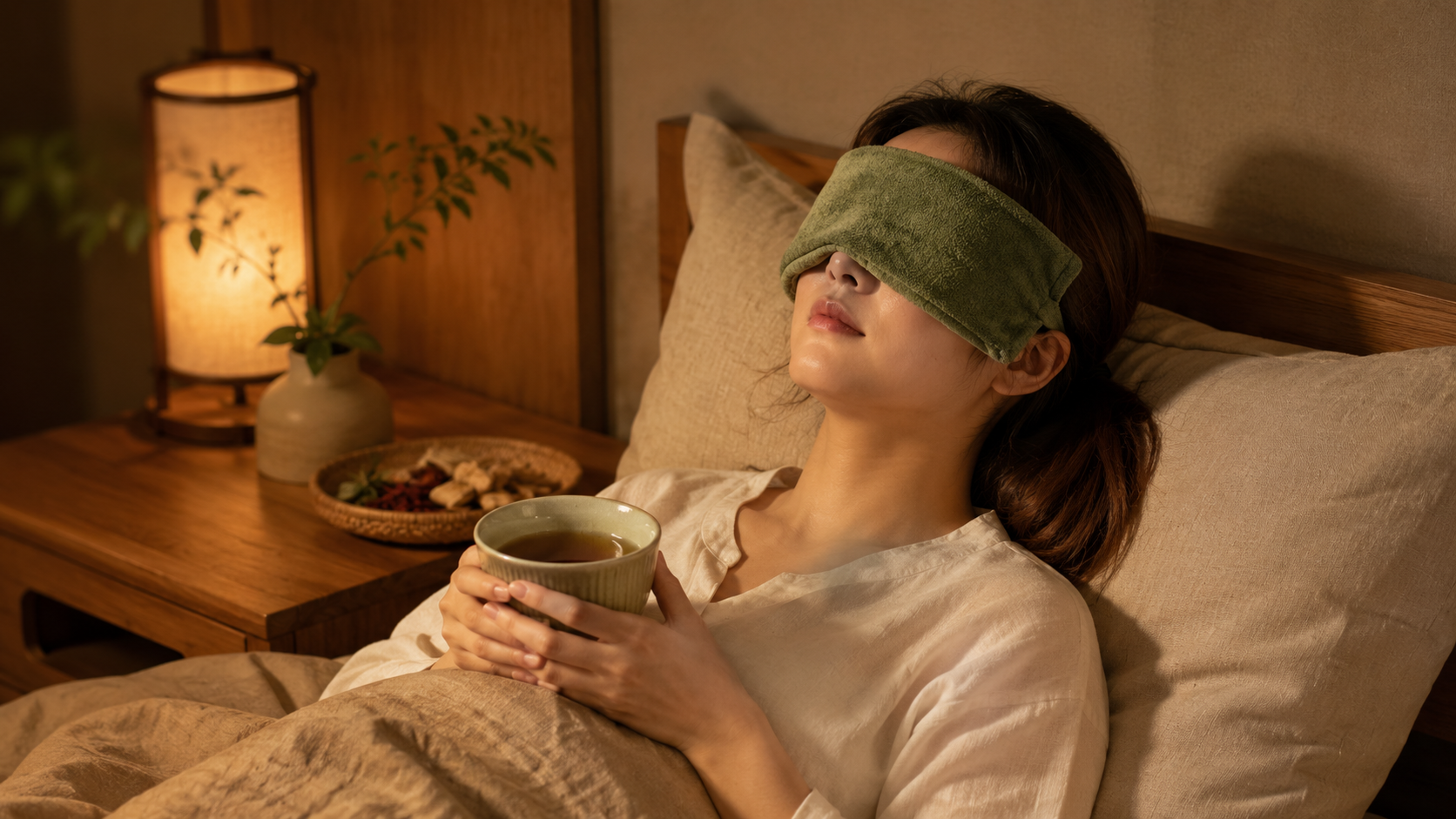
A warm towel, warm compress pack, or soft shoulder warmer can be easier for nighttime use than gua sha. Keep the temperature comfortable and use it for about 10 to 15 minutes.
Step 4: Finish with warm tea
A simple warm drink, such as roasted barley tea, red date tea, goji berry tea, or chrysanthemum tea, can make the routine feel complete. Keep the formula simple and drink slowly.
Routine Map
A Practical Day-to-Night Office Shoulder Routine
Daytime Office Care
- Use a posture support strap for 1 to 2 hours as a reminder.
- Use smokeless portable moxa only when you can monitor heat safely.
- Take a short massage-hammer break for 3 to 5 minutes.
Evening Wind-Down
- Set screens aside before bed.
- Warm the hands and relax the eye area.
- Use a warm compress on the neck and shoulders.
- End with a warm tea ritual.
| Tool | Best Time | Main Use | Beginner Note |
|---|---|---|---|
| Posture support strap | Daytime work | Posture awareness and shoulder reminder | Use briefly and comfortably; do not sleep in it. |
| Smokeless portable moxa | Daytime or home-office breaks | Gentle warmth for shoulder and upper-back comfort | Monitor heat, ventilate, and never leave it unattended. |
| Massage hammer | Work breaks | Quick tapping routine over shoulder and upper-back areas | Use light rhythm; avoid spine and bony areas. |
| Gua sha board | Occasional supportive care | Gentle neck and shoulder bodywork | Use only when suitable; do not chase strong marks. |
| Warm compress | Evening | Soft neck and shoulder comfort before rest | Keep the heat comfortable and stay screen-free. |
Choose Your Start
Different Needs, Different First Tools
New to Office Self-Care
Start with a posture support strap and a simple warm-compress habit. They are easy to understand and gentle enough for most daily routines.
Shoulders Feel Cool in Air Conditioning
Choose smokeless portable moxa, warm compress, and warm tea. Keep the focus on comfortable warmth rather than intensity.
Shoulders Feel Heavy After Sitting
Try a short massage-hammer break during the day, then use warm compress at night to close the routine.
Rounded Shoulder Habit
Begin with posture awareness. A support strap can remind the body to return to a more open and natural working position.
Want a Complete Routine
Use daytime maintenance tools first, then keep the evening routine gentle: screens away, eye relaxation, warm compress, and tea.
Interested in Gua Sha
Keep it occasional, light, and suitable for your body. Skip it when the skin or overall body state is not appropriate.
Conclusion
The Best Office Routine Starts During the Day
Neck and shoulder care is not only an evening task. For office workers, the most useful approach begins during the workday: posture awareness, gentle warmth when appropriate, and short movement breaks.
At night, the routine should become softer. Put the phone away, warm the eye area, use a comfortable compress, and close the day with a warm drink. Gua sha can remain an optional tool, used only when the timing and body state are suitable.
Simple routines are easier to repeat. And repeated gentle habits often become the most realistic form of daily wellness.
FAQ
Common Questions
Should I do gua sha every night?
No. Gua sha is optional and not suitable for everyone. Keep it light, occasional, and avoid it when the skin or body state is not appropriate.
Can I sleep in a posture support strap?
No. It is better used as a daytime posture reminder. Sleep should allow the shoulders and back to rest naturally.
Can I use smokeless portable moxa at work?
Only if your space allows it and you can monitor heat safely. Use a dedicated holder, keep air moving gently, and never leave burning moxa unattended.